Why revise the air quality directive now?
Ambient air quality remains, according to the European Environment Agency (EEA), the leading environmental risk to human health in the European Union: its most recent assessments attribute nearly 240,000 premature deaths a year in the EU to chronic exposure to fine particles (PM2.5), and find that almost the whole of Europe's urban population (around 96% of city dwellers) breathes air whose PM2.5 concentrations exceed the level recommended by the World Health Organization (WHO). This finding, documented year after year by national monitoring networks, has fuelled growing political and legal pressure to tighten a regulatory framework whose core (Directive 2008/50/EC) dated back nearly two decades.
A Recast, Not a Mere Adjustment: What Directive (EU) 2024/2881 Replaces
Formally entitled Directive (EU) 2024/2881 of the European Parliament and of the Council of 23 October 2024 on ambient air quality and cleaner air for Europe, the text was published in the Official Journal of the European Union (OJEU) on 20 November 2024 and entered into force twenty days later, in mid-December 2024, in accordance with the general rule on the entry into force of Union acts. Legally, it is a "recast": a legislative technique that merges several existing directives into a single, coherent, renumbered text, rather than amending them separately through successive amendments.
Alignment with the 2021 WHO Guidelines
In September 2021, the WHO published a substantial revision of its Global Air Quality Guidelines, appreciably lowering, for most regulated pollutants, the concentration levels above which significant health effects are documented in the epidemiological literature. This revision was based on a far larger body of scientific data than was available for the previous 2005 edition, notably on the long-term effects of exposure to concentrations formerly considered free of notable risk.
New Limit Values by 2030
The most visible change in Directive (EU) 2024/2881 concerns the lowering of the limit values applicable from 2030 for several major pollutants. For fine particles PM2.5, the annual limit value is reduced from 25 µg/m³ (the threshold set by Directive 2008/50/EC) to 10 µg/m³ (a 2.5-fold reduction) and a daily limit value is introduced for the first time for this pollutant, set at 25 µg/m³, with the number of hours or days of exceedance tolerated per year strictly governed by the text. For PM10 particles, the annual limit value falls from 40 µg/m³ to 20 µg/m³. For nitrogen dioxide (NO2), the annual limit value is likewise halved, from 40 µg/m³ to 20 µg/m³.
New Pollutants Under Monitoring
The merger with Directive 2004/107/EC formally brings into the single text the monitoring of arsenic, cadmium, mercury, nickel and polycyclic aromatic hydrocarbons (measured via benzo(a)pyrene as a tracer), previously governed by a separate text. This integration confirms the logic of unified treatment of all ambient air pollutants mentioned above, without fundamentally calling into question the monitoring architecture already in place for these substances.
Strengthened and Denser Monitoring Networks
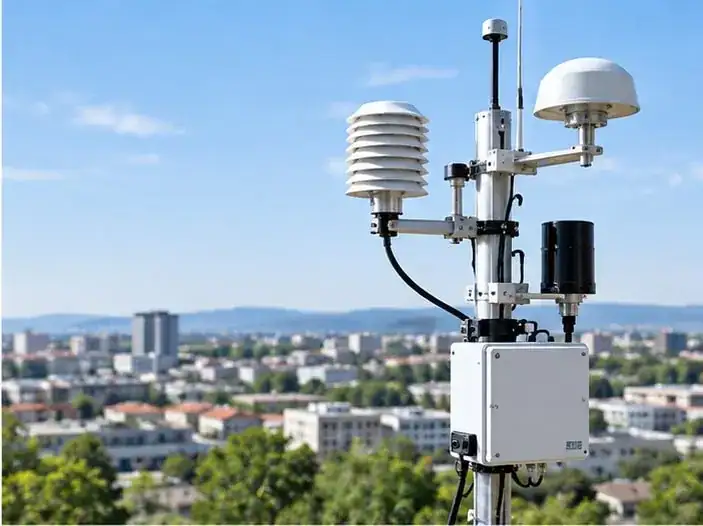
The directive significantly strengthens the requirements for the design of air quality measurement networks, revising the rules for determining the minimum number of sampling points according to the exposed population and the identified sources of pollution. It also introduces the notion of monitoring "supersites": particularly comprehensive measurement stations, able to characterise in particular the chemical composition of fine particles, which contribute to a better understanding of local pollution sources (identifying the share attributable to traffic, residential heating, industry or agriculture) beyond the mere finding of an exceedance or compliance.
Air Quality Plans, Roadmaps and Harmonised Index
Beyond the limit values themselves, the directive strengthens the content and ambition of the air quality plans that the competent authorities must draw up in areas where these values are exceeded, requiring more precise, better documented measures accompanied by an assessment of their expected effectiveness in bringing concentrations below the regulatory thresholds as soon as possible. It also introduces a new anticipatory logic: air quality "roadmaps" may be required in areas that, without yet being in exceedance, risk failing to meet the limit values applicable by 2030, a preventive approach intended to prevent local authorities from waiting for a threshold to actually be crossed before acting.
Access to Justice and Compensation for Health Damage: A Notable Advance
One of the most discussed innovations of Directive (EU) 2024/2881 concerns access to justice and compensation for health damage. The text requires Member States to guarantee the public concerned (including environmental or public health associations meeting certain criteria) access to an administrative or judicial review procedure to challenge the legality of air quality plans, roadmaps and short-term action plans, as well as compliance with monitoring obligations. These procedures must be fair, swift and not prohibitively expensive, a classic requirement of European environmental law, here explicitly applied to the field of ambient air.
Transposition Timetable and Operational Implications
In terms of timing, the directive was adopted on 23 October 2024, published in the Official Journal of the European Union on 20 November 2024 and entered into force about twenty days later. In accordance with its article on final provisions, Member States have two years to transpose its requirements into national law, that is, by 11 December 2026 at the latest. The new limit values, for their part, apply from 2030, which leaves an interim period of several years between the legal transposition of the text and the deadline for actual compliance in the field.
Outlook: The Trajectory to 2050 and Full Alignment with the WHO
Directive (EU) 2024/2881 does not claim to close the regulatory work on ambient air quality in Europe: it explicitly organises its own future revision, following a gradual trajectory towards full alignment with the strictest values recommended by the WHO by 2050, consistent with the long-term "zero pollution" ambition of the European Green Deal. The 2030 deadlines introduced by the text should thus be understood as an intermediate step in a structural and lasting movement of regulatory tightening, not as an endpoint.