

The regulatory framework for your measurements
Standards
Each standard has its own technical scope (target pollutant, measurement principle, analysis method) and its own implementation requirements. The pages below explain, standard by standard, what each one concretely covers and which CDL-Tecora instruments make it possible to comply with it.
- 23reference standards
- 9measurement fields
- 50 yearsof standards expertise
Dust and particulates
5 standards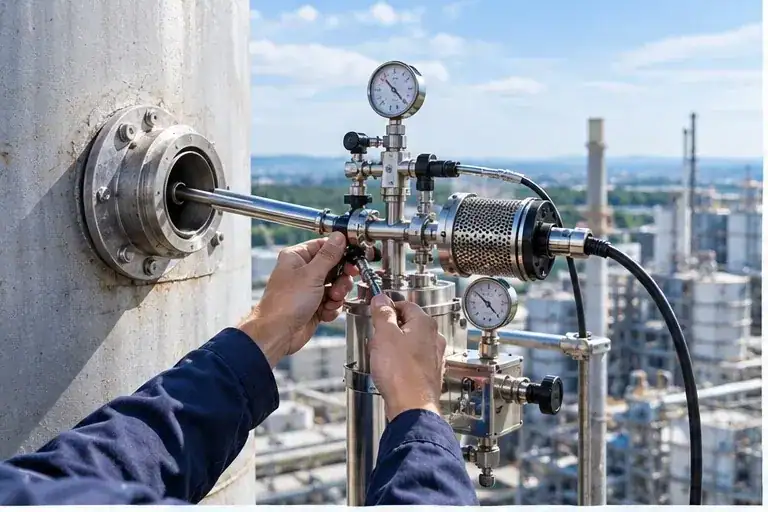
EN 13284-1: Determination of Low Range Mass Concentration of Dust
Manual gravimetric reference method for low dust concentrations in channelled emissions
The EN 13284-1 standard ("Stationary source emissions: Determination of low range mass concentration of dust, Part 1: Manual gravimetric method") is the standardised reference method (SRM) for measuring dust concentrations below 50 mg/Nm³ in the emission ducts of stationary sources. It relies on isokinetic sampling of the gaseous effluent through a tared filter, weighed before and then after drying to determine the mass of dust captured. It is the method against which automatic continuous dust monitors (AMS) must be compared to be qualified as an equivalent method under EN 14181.
View standard sheet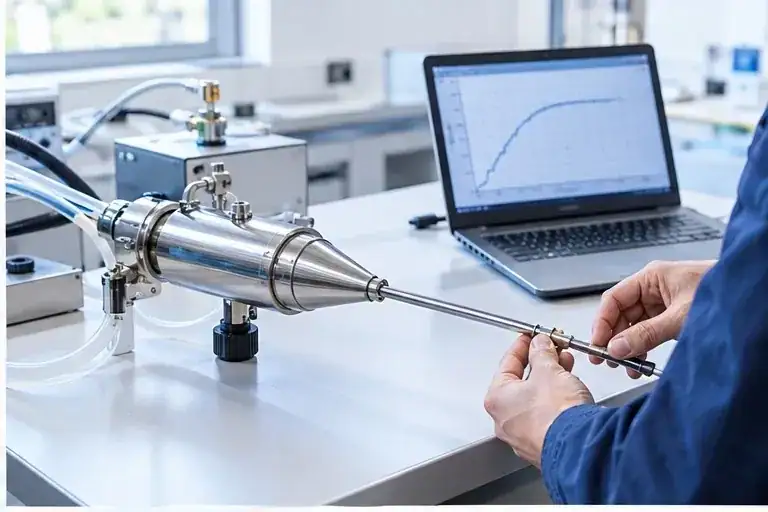
ISO 9096: Manual Determination of Mass Concentration of Particulate Matter
The international equivalent of the European reference method for the gravimetric measurement of dust from stationary sources
ISO 9096 is the international reference standard for the manual determination of the mass concentration of particulate matter (dust) in channelled emissions from stationary sources, by isokinetic sampling and gravimetric weighing of the filter. Developed in close coordination with the European Committee for Standardization, it relies on the same principle as the European standard EN 13284-1 but is the reference used outside the European Union and by international industrial groups that want a single protocol recognised across all their sites, whatever the country. CDL-Tecora offers isokinetic sampling probes explicitly compliant with ISO 9096, EN 13284-1 and US EPA Method 17.
View standard sheet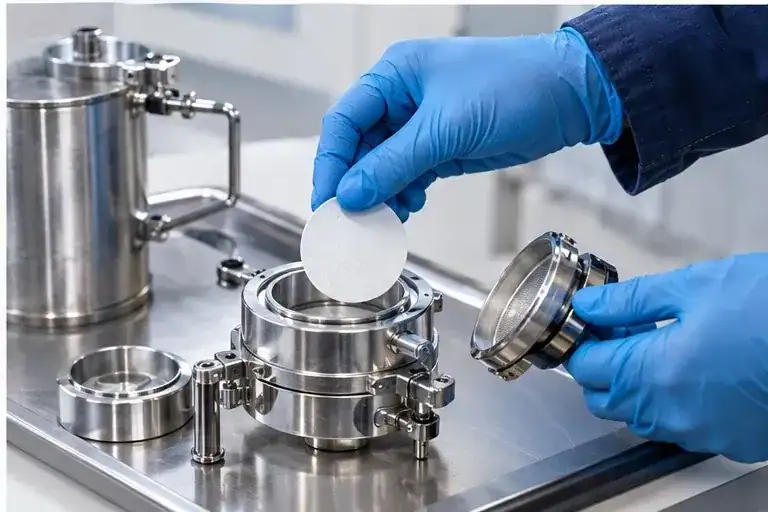
US EPA Method 17: Particulate Matter by In-Stack Filtration
American isokinetic method for determining dust by filtration directly inside the duct
US EPA Method 17 is the American reference method for determining particulate matter in stationary source emissions by in-stack filtration: the filter is positioned directly inside the duct rather than in an external heated housing. For the American framework, it plays a role comparable to that of EN 13284-1 and ISO 9096 in Europe.
View standard sheet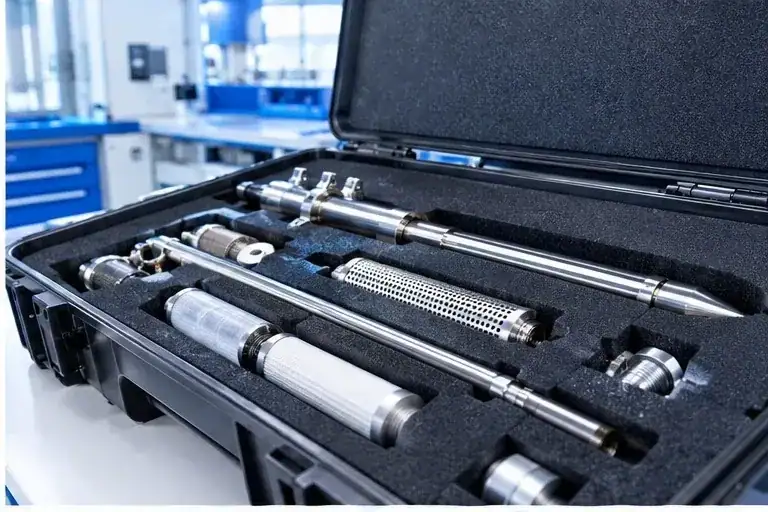
US EPA Method 5 & Method 23: Particulates and Dioxins/Furans (American Reference)
The American reference methods for particulate matter (Method 5) and dioxins/furans (Method 23) in channelled emissions
US EPA Method 5 and US EPA Method 23 are two reference methods of the US Environmental Protection Agency used on stationary sources: Method 5 determines the concentration of particulate matter by isokinetic sampling with out-of-stack filtration, while Method 23 determines dioxins, furans and dioxin-like PCBs by sampling on XAD-2 resin followed by analysis by gas chromatography coupled with high-resolution mass spectrometry (HRGC/HRMS). Method 5 is to be distinguished from its sister method US EPA Method 17, which filters particulate matter directly in the duct ("in-stack"): these are the methods documented by CDL-Tecora's isokinetic probes. For dioxins, on the other hand, CDL-Tecora's DECS is explicitly compliant with Method 23, the recognised American equivalent of the European standard EN 1948.
View standard sheet
VDI 2066: Gravimetric Measurement of Dust in Waste Gases
German reference method for the manual and gravimetric determination of dust in industrial gaseous effluents
VDI 2066 (Part 1) is the German reference guideline, published by the VDI (Verein Deutscher Ingenieure), for the manual and gravimetric determination of the concentration and mass flow of dust in a channelled gas stream (stack, industrial duct). It relies on isokinetic sampling of a fraction of the flow, retention of the particles on a filter and then weighing of the mass collected relative to the volume of gas sampled. For its scope of application A (concentrations up to 50 mg/m³), its technical requirements are declared identical to those of the European standard EN 13284-1, which allows a recognised equivalence in regulatory campaigns carried out in Germany.
View standard sheetHeavy metals
2 standards
EN 14385: Determination of Total Heavy Metal Emissions
Isokinetic sampling and determination of heavy metals (As, Cd, Cr, Co, Cu, Mn, Ni, Pb, Sb, Tl, V) in channelled emissions
The EN 14385 standard is the European reference method for isokinetic sampling and determination of the total emission of eleven heavy metals (antimony (Sb), arsenic (As), cadmium (Cd), chromium (Cr), cobalt (Co), copper (Cu), manganese (Mn), nickel (Ni), lead (Pb), thallium (Tl) and vanadium (V)) in channelled emissions from stationary sources, in particular waste incineration plants. It does not cover mercury, which is measured separately under EN 13211, a distinction that is often a source of confusion in the field. CDL-Tecora offers the Outstack, a modular heated isokinetic sampling probe suited to measurement protocols for heavy metals, acid compounds and dioxins/furans.
View standard sheet
US EPA Method 29: Metals Emissions (Including Mercury)
American isokinetic reference method for heavy metals, including mercury in the same sampling train
US EPA Method 29 is the American reference method for the isokinetic determination of metals emissions from stationary sources. Structurally close to EN 14385, it differs by a wider scope: mercury is included in the same sampling train, whereas in Europe it is covered by a separate standard and campaign, EN 13211.
View standard sheetMercury
2 standards
CEN/TS 17286: Measuring Mercury with Automated Measuring Systems (AMS)
European technical specification for continuous, semi-continuous or automated periodic measurement of mercury
CEN/TS 17286 is a European technical specification (CEN/TS status, not yet a full EN standard) that defines the requirements applicable to automated measuring systems (AMS) for mercury operating continuously, semi-continuously or by automated periodic sampling, complementing the manual reference method EN 13211. It responds to a growing requirement for continuous mercury monitoring, notably under the BAT conclusions of several sectors (waste-to-energy plants, cement works), which now require continuous monitoring rather than periodic spot checks.
View standard sheet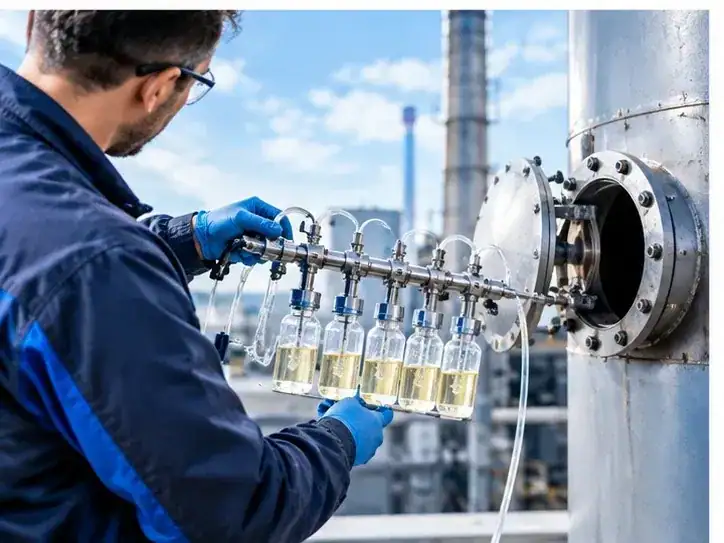
EN 13211: Manual Determination of the Concentration of Total Mercury in Stationary Source Emissions
Manual reference method for sampling and determining total mercury in channelled emissions
EN 13211 (2001) is the European manual reference method for determining the concentration of total mercury in gaseous emissions from stationary sources (stacks, industrial ducts). The mercury is sampled isokinetically and trapped in a train of impingers containing an acidic absorbing solution, then determined in the laboratory, generally by cold vapour atomic absorption spectrometry (CVAAS). It is a spot measurement (a few hours) that gives total mercury (particulate and gaseous, all species combined), to be distinguished from continuous mercury monitoring, which is governed by a different technical specification (CEN/TS 17286).
View standard sheetDioxins, furans and POPs
2 standards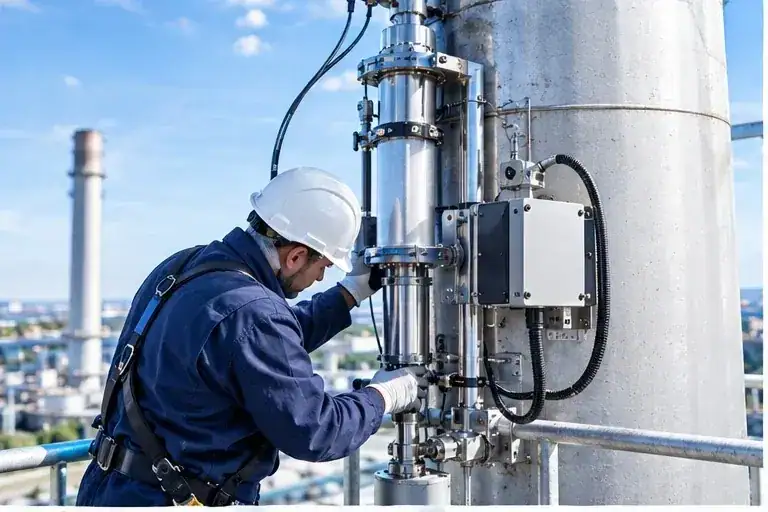
EN 1948: Determination of Dioxins and Furans (PCDD/PCDF)
Sampling and determination of dioxins, furans and dioxin-like PCBs in channelled emissions
The EN 1948 standard is the European reference method for sampling (Part 1), extraction/clean-up (Part 2) and identification/quantification by chromatography (Part 3). It thus covers PCDD/PCDF (dioxins and furans) in channelled emissions from stationary sources. It applies in particular, for example, to waste-to-energy plants and to cement works co-incinerating alternative fuels. CDL-Tecora offers the DECS, a sampling system compliant with EN 1948 and USEPA Method 23.
View standard sheetUS EPA Method 5 & Method 23: Particulates and Dioxins/Furans (American Reference)
The American reference methods for particulate matter (Method 5) and dioxins/furans (Method 23) in channelled emissions
US EPA Method 5 and US EPA Method 23 are two reference methods of the US Environmental Protection Agency used on stationary sources: Method 5 determines the concentration of particulate matter by isokinetic sampling with out-of-stack filtration, while Method 23 determines dioxins, furans and dioxin-like PCBs by sampling on XAD-2 resin followed by analysis by gas chromatography coupled with high-resolution mass spectrometry (HRGC/HRMS). Method 5 is to be distinguished from its sister method US EPA Method 17, which filters particulate matter directly in the duct ("in-stack"): these are the methods documented by CDL-Tecora's isokinetic probes. For dioxins, on the other hand, CDL-Tecora's DECS is explicitly compliant with Method 23, the recognised American equivalent of the European standard EN 1948.
View standard sheetQuality assurance and certification
2 standards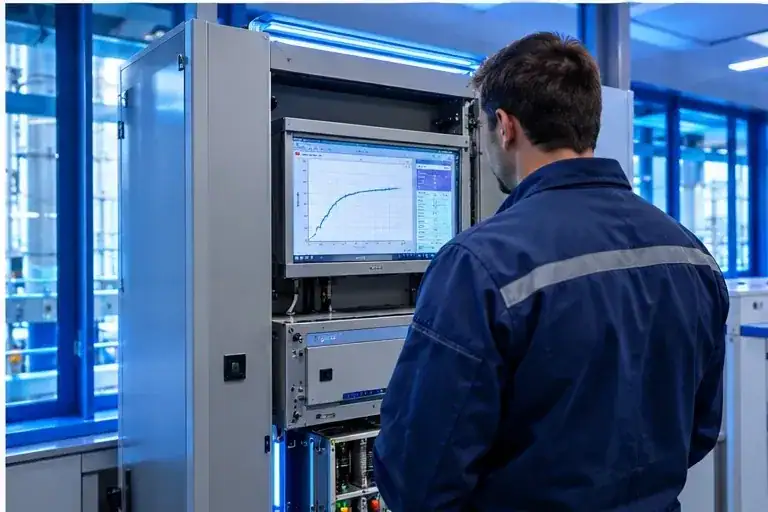
EN 14181: Quality Assurance of Automated Measuring Systems (QAL1, QAL2, QAL3, AST)
The European framework that guarantees the metrological reliability of continuous analysers (CEMS) on channelled emissions
The EN 14181 standard (NF EN 14181) defines the quality assurance framework applicable to automated measuring systems (CEMS) permanently installed on channelled emissions from stationary sources. It organises this control into four levels (QAL1 (type certification of the instrument), QAL2 (site-specific calibration), QAL3 (continuous drift monitoring by the operator) and AST (annual surveillance test)) and is not itself a sampling method: QAL2 and AST require the CEMS to be compared with the corresponding manual reference method (for example EN 13284-1 for dust or EN 1948 for dioxins), measured in parallel on the same duct.
View standard sheet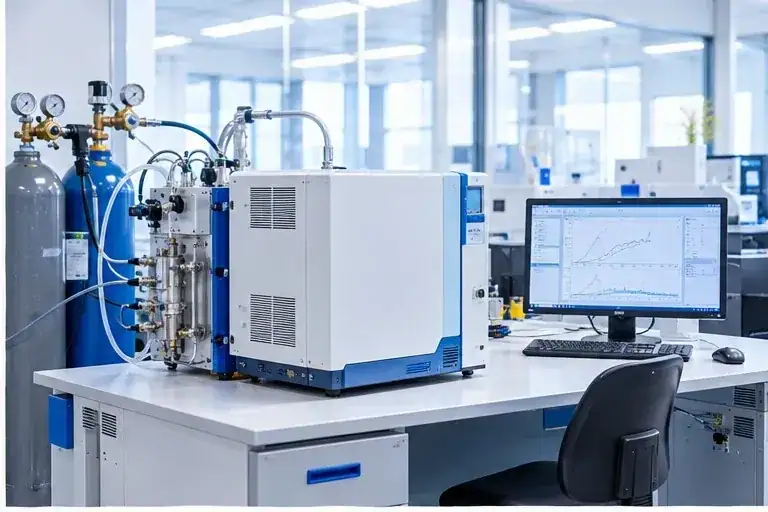
EN 15267: Certification of Automated Measuring Systems (AMS/CEMS)
The certification framework that attests that an analyser model is fit to continuously monitor the emissions of a stationary source
EN 15267 is the European certification framework for automated measuring systems (AMS), better known by the acronym CEMS (Continuous Emission Monitoring Systems). Its Part 3 sets out the performance criteria and test procedures that an analyser model must satisfy, in the laboratory and then at a pilot site, before it can be sold as a compliant CEMS for the regulatory monitoring of stationary source emissions. This type certification (known as QAL1), issued by an accredited body such as TÜV or MCERTS, is a prerequisite: the EN 14181 standard then governs the measurement quality of the instrument once it is installed at a given site.
View standard sheetInternational equivalents
5 standardsISO 9096: Manual Determination of Mass Concentration of Particulate Matter
The international equivalent of the European reference method for the gravimetric measurement of dust from stationary sources
ISO 9096 is the international reference standard for the manual determination of the mass concentration of particulate matter (dust) in channelled emissions from stationary sources, by isokinetic sampling and gravimetric weighing of the filter. Developed in close coordination with the European Committee for Standardization, it relies on the same principle as the European standard EN 13284-1 but is the reference used outside the European Union and by international industrial groups that want a single protocol recognised across all their sites, whatever the country. CDL-Tecora offers isokinetic sampling probes explicitly compliant with ISO 9096, EN 13284-1 and US EPA Method 17.
View standard sheetUS EPA Method 17: Particulate Matter by In-Stack Filtration
American isokinetic method for determining dust by filtration directly inside the duct
US EPA Method 17 is the American reference method for determining particulate matter in stationary source emissions by in-stack filtration: the filter is positioned directly inside the duct rather than in an external heated housing. For the American framework, it plays a role comparable to that of EN 13284-1 and ISO 9096 in Europe.
View standard sheetUS EPA Method 29: Metals Emissions (Including Mercury)
American isokinetic reference method for heavy metals, including mercury in the same sampling train
US EPA Method 29 is the American reference method for the isokinetic determination of metals emissions from stationary sources. Structurally close to EN 14385, it differs by a wider scope: mercury is included in the same sampling train, whereas in Europe it is covered by a separate standard and campaign, EN 13211.
View standard sheetUS EPA Method 5 & Method 23: Particulates and Dioxins/Furans (American Reference)
The American reference methods for particulate matter (Method 5) and dioxins/furans (Method 23) in channelled emissions
US EPA Method 5 and US EPA Method 23 are two reference methods of the US Environmental Protection Agency used on stationary sources: Method 5 determines the concentration of particulate matter by isokinetic sampling with out-of-stack filtration, while Method 23 determines dioxins, furans and dioxin-like PCBs by sampling on XAD-2 resin followed by analysis by gas chromatography coupled with high-resolution mass spectrometry (HRGC/HRMS). Method 5 is to be distinguished from its sister method US EPA Method 17, which filters particulate matter directly in the duct ("in-stack"): these are the methods documented by CDL-Tecora's isokinetic probes. For dioxins, on the other hand, CDL-Tecora's DECS is explicitly compliant with Method 23, the recognised American equivalent of the European standard EN 1948.
View standard sheetVDI 2066: Gravimetric Measurement of Dust in Waste Gases
German reference method for the manual and gravimetric determination of dust in industrial gaseous effluents
VDI 2066 (Part 1) is the German reference guideline, published by the VDI (Verein Deutscher Ingenieure), for the manual and gravimetric determination of the concentration and mass flow of dust in a channelled gas stream (stack, industrial duct). It relies on isokinetic sampling of a fraction of the flow, retention of the particles on a filter and then weighing of the mass collected relative to the volume of gas sampled. For its scope of application A (concentrations up to 50 mg/m³), its technical requirements are declared identical to those of the European standard EN 13284-1, which allows a recognised equivalence in regulatory campaigns carried out in Germany.
View standard sheetEmerging pollutants
1 standard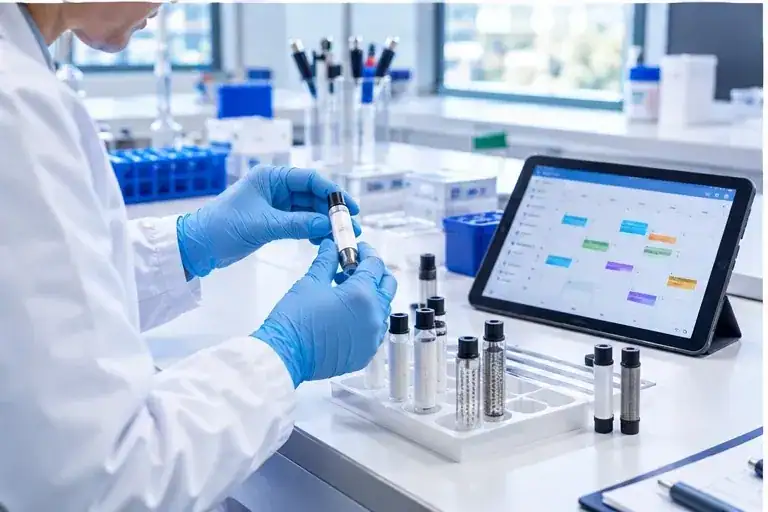
Acid gases (HCl, HF, SO2)
5 standards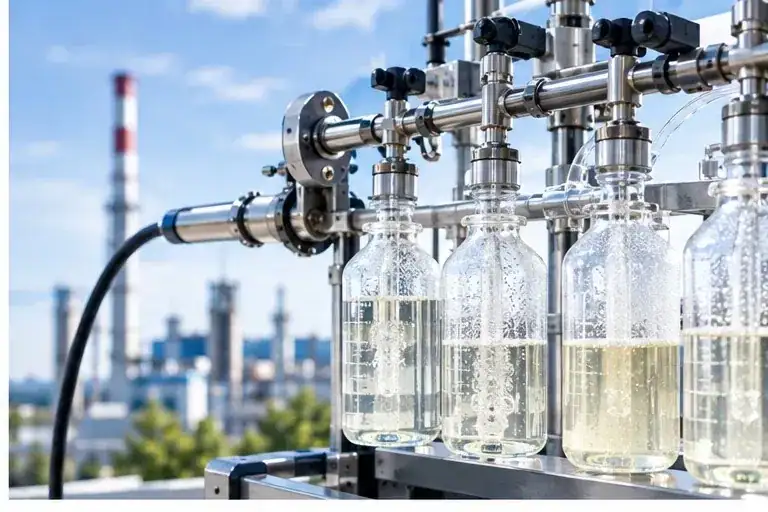
EN 14791: Determination of the Mass Concentration of Sulphur Dioxide
Manual reference method for measuring sulphur dioxide (SO2) in channelled emissions
EN 14791 is the European reference method for the manual determination of the mass concentration of sulphur dioxide (SO2) in channelled emissions from stationary sources. The gaseous effluent is sampled through an absorbing solution based on hydrogen peroxide, which oxidises the SO2 to sulphate, then quantified by ion chromatography or titrimetry. It serves as the reference method for qualifying automatic SO2 analysers installed for continuous monitoring.
View standard sheet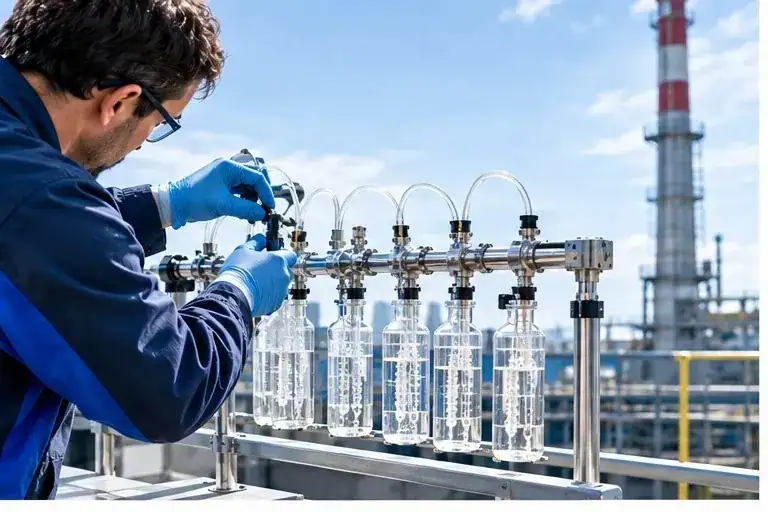
EN 1911: Determination of Gaseous Chlorides Expressed as HCl
Manual reference method for measuring hydrogen chloride (HCl) in channelled emissions
EN 1911 is the European reference method for determining the mass concentration of gaseous chlorides, expressed as HCl (hydrogen chloride), in channelled emissions from stationary sources. It relies on sampling the gaseous effluent through a series of wash bottles containing an absorbing solution, followed by determination of the chlorides by ion chromatography, titrimetry or potentiometry. It also serves as the reference method for qualifying automatic HCl monitors installed for continuous monitoring.
View standard sheet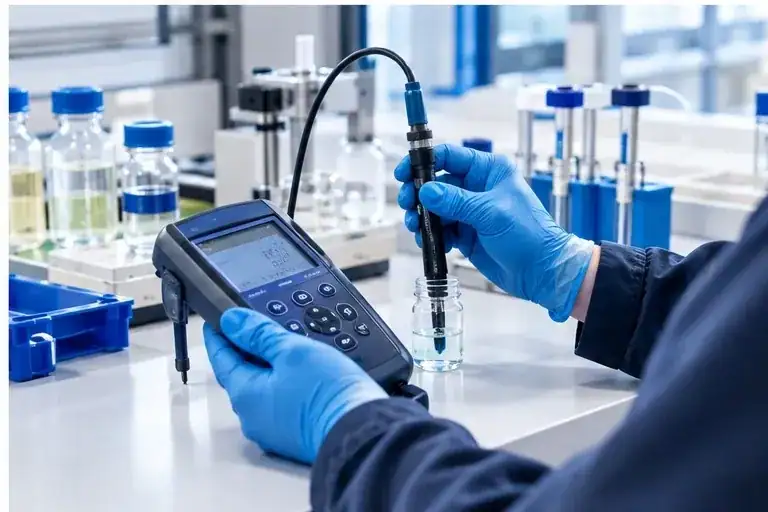
US EPA Method 13A: Total Fluoride Emissions
American isokinetic method for determining total fluoride (gaseous and particulate) by specific-ion electrode
US EPA Method 13A is an American reference method for determining total fluoride emissions (gaseous and particulate forms, expressed as HF) in stationary source emissions, in particular for processes involving hydrofluoric acid or fluorinated raw materials (aluminium, phosphate and glass production, cement works). The fluoride captured is quantified by a fluoride ion-specific electrode (SIE).
View standard sheet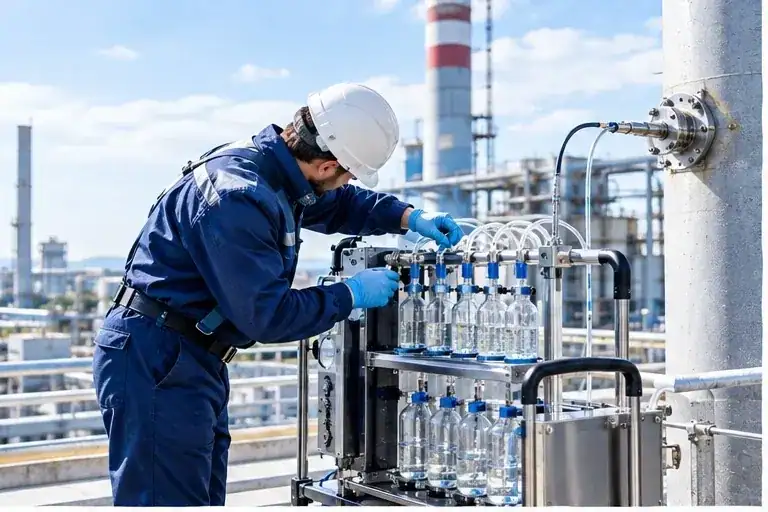
US EPA Method 26A: Hydrogen Halides and Halogens
American isokinetic method for the combined determination of HCl, HF and free halogens (Cl2, Br2) in channelled emissions
US EPA Method 26A is an American reference method for the isokinetic determination of hydrogen halides (HCl, HF) and free halogens (Cl2, Br2) in stationary source emissions, using a two-stage sampling train of absorbing solutions, acidic then basic. It covers a wider scope than the European method EN 1911, which is limited to HCl.
View standard sheet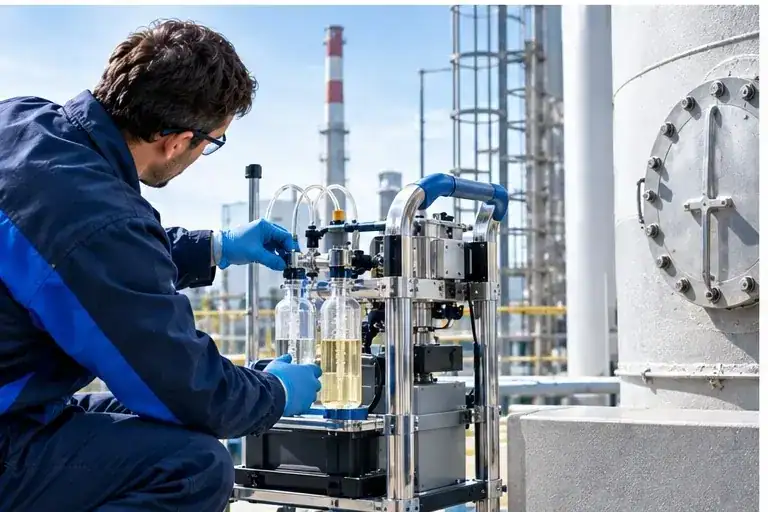
US EPA Method 8: Sulphuric Acid Mist and Sulphur Dioxide
American isokinetic method for the combined measurement of sulphuric acid mist (H2SO4) and sulphur dioxide (SO2)
US EPA Method 8 is the American reference method for determining emissions of sulphuric acid mist (H2SO4, including sulphur trioxide SO3) and sulphur dioxide (SO2) in stationary source emissions, from a single isokinetic sampling train. Unlike EN 14791, which is limited to SO2, this American method captures both species in a single campaign.
View standard sheetAmbient air quality
5 standards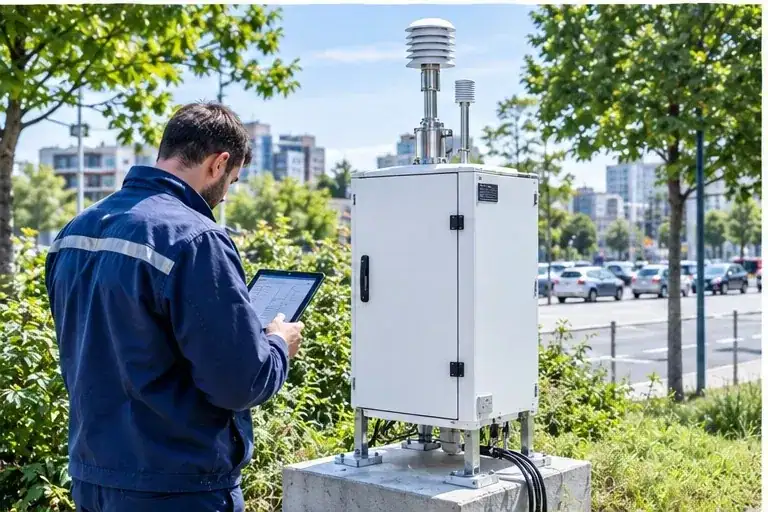
EN 12341: Gravimetric Measurement of PM10 and PM2.5 Particles in Ambient Air
Gravimetric reference method for monitoring fine PM10 and PM2.5 particles in ambient air
EN 12341 is the European reference method for the gravimetric determination of the concentration of PM10 and PM2.5 particles in ambient air, used by air quality monitoring networks (AASQA in France) for regulatory control and to validate the automatic analysers installed in the field. Unlike the methods used to measure channelled emissions, it applies to outdoor air and not to an industrial duct.
View standard sheet
EN 14211: Measurement of Nitrogen Dioxide and Nitrogen Monoxide in Ambient Air by Chemiluminescence
Chemiluminescence reference method for monitoring NO2 and NO in ambient air
EN 14211 is the European reference method for measuring the concentration of nitrogen dioxide (NO2) and nitrogen monoxide (NO) in ambient air by chemiluminescence. It is used by air quality monitoring networks for the regulatory control of these pollutants, which come mainly from road traffic and combustion.
View standard sheet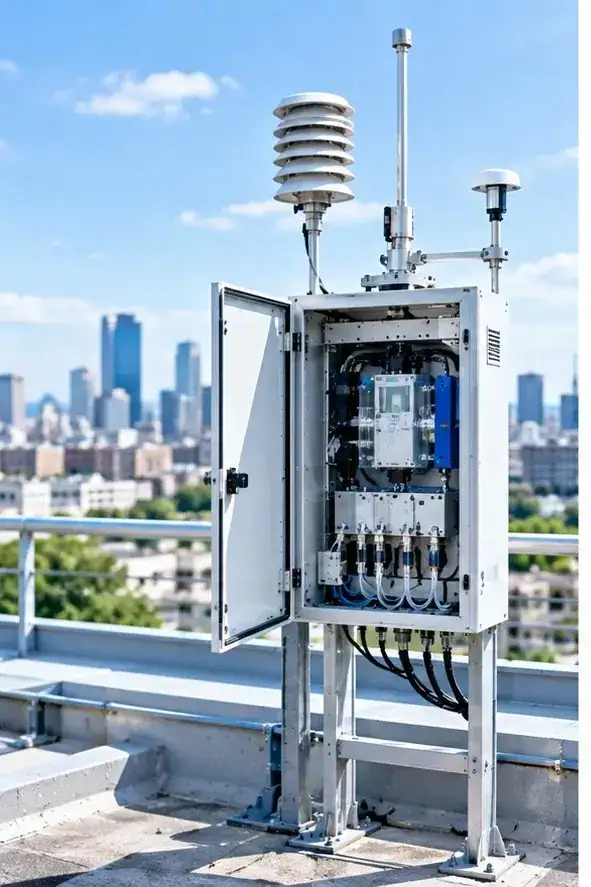
EN 14212: Measurement of Sulphur Dioxide in Ambient Air by UV Fluorescence
Ultraviolet fluorescence reference method for monitoring SO2 in ambient air
EN 14212 is the European reference method for measuring the concentration of sulphur dioxide (SO2) in ambient air by ultraviolet fluorescence. It is used by air quality monitoring networks for the regulatory monitoring of this pollutant, which comes mainly from the combustion of sulphur-containing fuels.
View standard sheet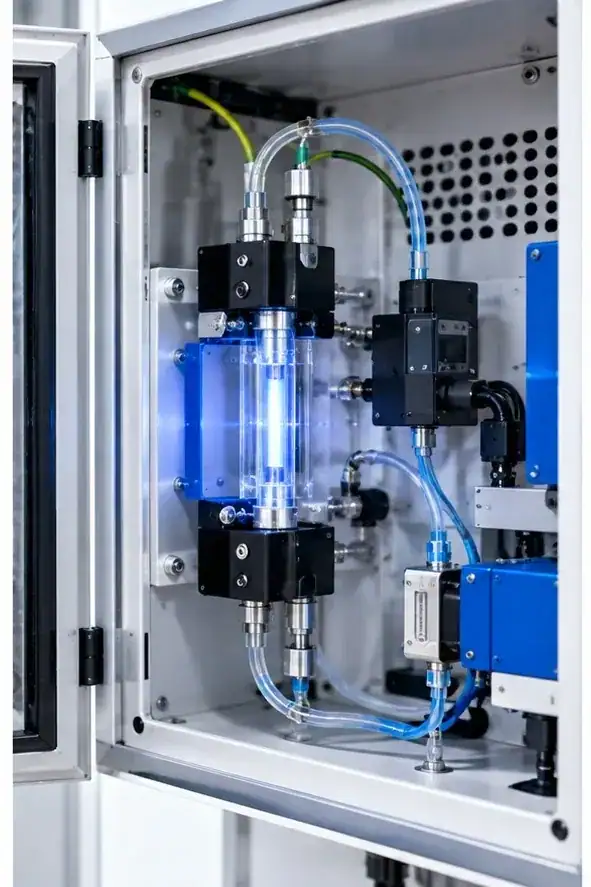
EN 14625: Measurement of Ozone in Ambient Air by Ultraviolet Photometry
Ultraviolet photometry reference method for monitoring ozone in ambient air
EN 14625 is the European reference method for measuring the concentration of ozone (O3) in ambient air by ultraviolet photometry. It is used by air quality monitoring networks to monitor this secondary pollutant, formed by a photochemical reaction between nitrogen oxides and volatile organic compounds under the effect of solar radiation.
View standard sheet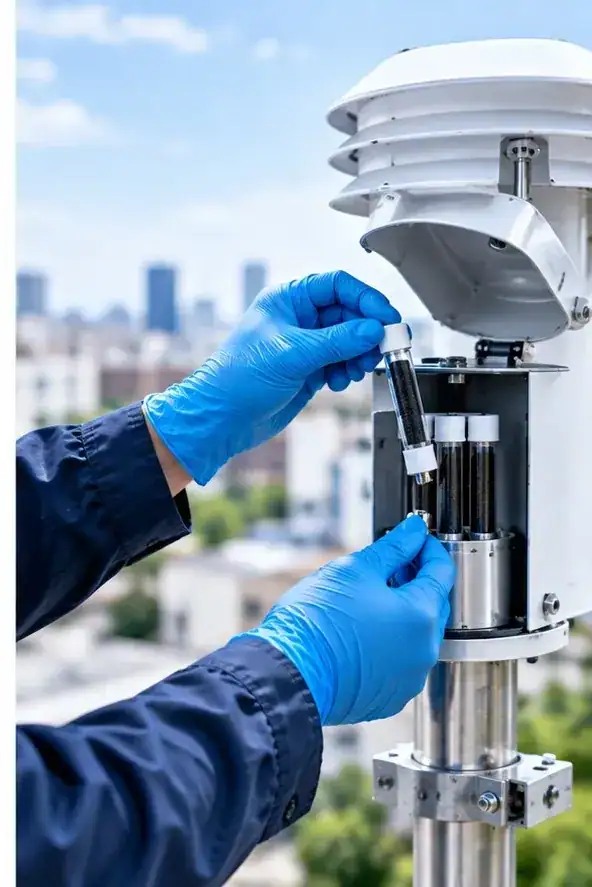
EN 14626: Measurement of Benzene in Ambient Air
Reference method by automatic sampling and gas chromatography for monitoring benzene in ambient air
EN 14626 is the European reference method for measuring the concentration of benzene in ambient air, by automatic pumped sampling onto an adsorbent medium followed by analysis by gas chromatography. It is used by air quality monitoring networks to monitor this volatile organic compound classified as a carcinogen, which comes in particular from road traffic and industrial sources.
View standard sheetA standard to identify, a campaign to prepare?
Our application engineers will help you choose the instrument that complies with the standard applicable to your installation.
FAQ
Have questions about our reference standards? Here are the most frequent answers.
Another question?How do I know which standard applies to my installation?
It depends on the pollutant measured (dust, heavy metals, mercury, dioxins, etc.), the type of installation and local regulations. Our application engineers identify the applicable standard from your prefectoral order or your country's regulations, then guide you to the compliant instrument.
What is the difference between a European standard (EN) and an American method (US EPA)?
Both pursue the same objective, measuring a pollutant reliably, but differ in the sampling protocol, the equipment required and the acceptance criteria. CDL-Tecora manufactures instruments compliant with both references, with the accessories specific to each.
What is quality assurance of automated measuring systems (QAL1, QAL2, QAL3, AST)?
It is the standards framework (EN 14181) that guarantees the long-term reliability of a continuous analyser (CEMS): verification at installation, periodic calibration by comparison with a reference method, then drift checks. The EN 14181 page details each step.
Can one standard cover several pollutants at once?
Yes, some reference methods (such as US EPA Method 5 & 23) cover both particulates and dioxins/furans in a single sampling protocol. This is why some of our standards pages appear in several categories on this page.
Are your instruments supplied with proof of compliance with standards?
Yes, each instrument is supplied with its technical documentation and, depending on the case, its type test certificates or qualification reports, needed to demonstrate compliance to the supervisory authorities.