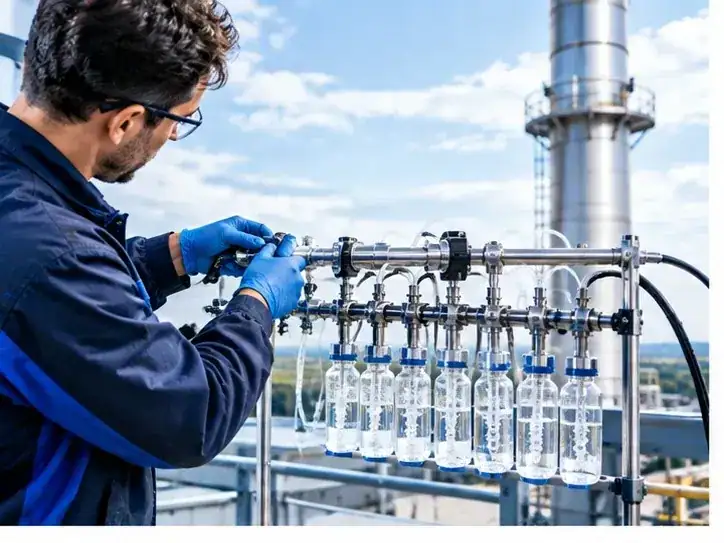
Technician assembling a train of bubblers for heavy metals sampling on a chimney

Heavy metals

EN 14385: Determination of Total Heavy Metal Emissions

Isokinetic sampling and determination of heavy metals (As, Cd, Cr, Co, Cu, Mn, Ni, Pb, Sb, Tl, V) in channelled emissions

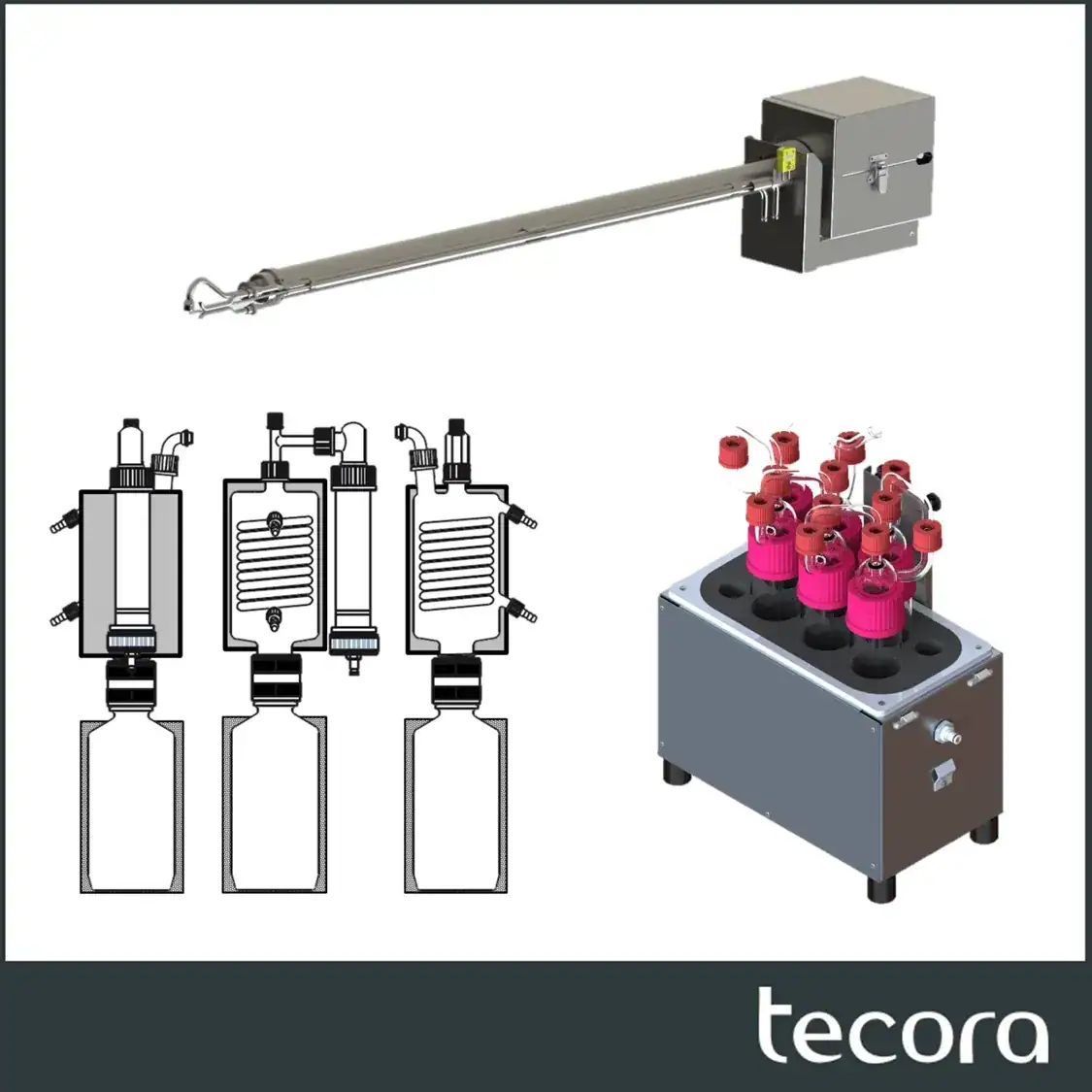
The EN 14385 standard is the European reference method for isokinetic sampling and determination of the total emission of eleven heavy metals (antimony (Sb), arsenic (As), cadmium (Cd), chromium (Cr), cobalt (Co), copper (Cu), manganese (Mn), nickel (Ni), lead (Pb), thallium (Tl) and vanadium (V)) in channelled emissions from stationary sources, in particular waste incineration plants. It does not cover mercury, which is measured separately under EN 13211, a distinction that is often a source of confusion in the field. CDL-Tecora offers the Outstack, a modular heated isokinetic sampling probe suited to measurement protocols for heavy metals, acid compounds and dioxins/furans.

Key figures

  • EN 14385:2024Standard
  • AAS / ICP-OES / ICP-MSAnalysis
  • 0,005 à 5 mg/Nm³Validated range
EN 14385, entitled "Stationary source emissions: Determination of the total emission of As, Cd, Cr, Co, Cu, Mn, Ni, Pb, Sb, Tl and V", specifies a manual reference method for determining the mass concentration of these eleven elements in channelled gaseous discharges. Revised in 2024 (replacing the 2004 version), it was validated primarily for the flue gases of waste-to-energy plants, but also applies to other industrial processes whose flue gas composition is comparable. The standard covers each element over a validated concentration range of approximately 0.005 to 5 mg/Nm³, which makes it usable both for high-emitting installations and for sites already well equipped with flue gas treatment.

Eleven target heavy metals

Sb, As, Cd, Cr, Co, Cu, Mn, Ni, Pb, Tl and V, determined individually and then reported as total emission per element

Two-fraction isokinetic sampling

Heated filter for the particulate fraction, impinger train (HNO₃/H₂O₂) for the gaseous/vapour fraction; the result adds the two together

Digestion followed by multi-technique analysis

HF/HNO₃ digestion (or HF-free alternative route since 2024), quantification by AAS, ICP-OES or ICP-MS depending on the required LOQ

Mercury excluded from the scope

Mercury is not covered by EN 14385: it has its own dedicated standard and sampling train, EN 13211

On the ground

Points to watch

Secure the isokinetic ratio before the campaign

A velocity pre-test in the duct should be used to choose the appropriate nozzle diameter: an isokinetic ratio outside the 0.95-1.15 range biases the particulate fraction captured and invalidates the result on the filter, regardless of the quality of the laboratory analysis.

Do not confuse EN 14385 and EN 13211 in the field

An EN 14385-compliant sampling train does not capture mercury in a reliable, usable way: if the prefectoral order also requires mercury monitoring, a dedicated EN 13211 sampling line must be set up in parallel, not deduced after the fact from the same train.

Control cross-contamination at trace level

Heavy metals are determined at very low concentrations: glassware, reagents and filters must be checked using field and laboratory blanks, otherwise even minimal contamination can be enough to skew the result for metals such as cadmium or thallium.

Choose the digestion route according to the matrix and the target LOQ

Conventional HF/HNO₃ digestion mineralises refractory silicates more completely than some HF-free alternatives; the choice must be consistent with the analysis technique selected (AAS, ICP-OES, ICP-MS) and the limit of quantification required for each element.

Size the sampled volume for the most demanding elements

At a well-treated installation, some metals (cadmium, thallium) may approach the method's limit of quantification: an insufficient sampling duration or volume makes it impossible to obtain a usable result for these elements, even if the other metals are correctly quantified.

Go further

Related standards

Frequently asked

FAQ

Questions about this standard? Here are the most common answers.

Another question?
Which metals can the EN 14385 standard measure?

EN 14385 covers eleven elements: antimony (Sb), arsenic (As), cadmium (Cd), chromium (Cr), cobalt (Co), copper (Cu), manganese (Mn), nickel (Ni), lead (Pb), thallium (Tl) and vanadium (V). Each element is determined individually and its total emission (particulate fraction + gaseous fraction) is reported separately.

Does EN 14385 also cover mercury?

No. Mercury is explicitly excluded from the scope of EN 14385 and is covered by a separate standard, EN 13211, which uses a specific sampling train and analysis method suited to its particular chemical behaviour (gaseous and particulate mercury). If mercury monitoring is required, an EN 13211 sampling line must be implemented in addition, often in parallel during the same campaign.

How does heavy metal sampling differ from dust sampling (EN 13284-1)?

Both methods rely on a similar isokinetic sampling principle, but EN 14385 adds, after the heated filter that retains the particulate fraction, an impinger train with an oxidising acidic absorbing solution that captures the gaseous/vapour fraction of volatile metals. The final result adds the two fractions together, whereas EN 13284-1 is concerned only with the total mass of particles collected on the filter.

How are the samples analysed in the laboratory?

The filter and the impinger solutions are first digested with acid (conventionally HF/HNO₃ with complexation using boric acid, or an HF-free alternative route introduced by the 2024 revision), then the metals are quantified by atomic absorption spectrometry (AAS), ICP-OES or ICP-MS depending on the limit of quantification required for each element.

What concentration range does the standard cover?

EN 14385 is validated for a concentration range of approximately 0.005 to 5 mg/Nm³ per element, mainly on flue gases from waste-to-energy plants, but the method is applicable to other industrial sources with a comparable flue gas composition.

Is the Outstack suitable for an EN 14385 campaign?

Yes. The Outstack is a modular heated isokinetic sampling probe that adapts to measurement protocols for heavy metals, acid compounds and dioxins and furans, so it can be reconfigured according to the standard targeted by the measurement campaign.

Preparing a measurement campaign? Our experts can help.

Personalised advice, a fast quote and technical support to choose the right instrument for this standard.