
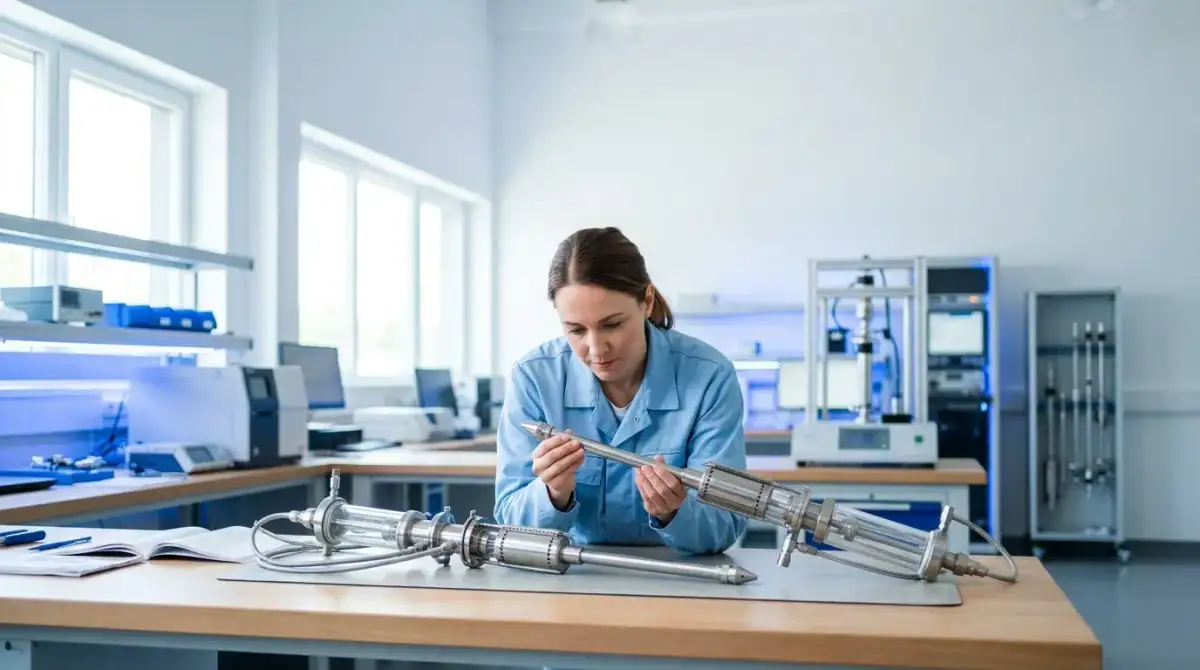
Technician comparing two isokinetic dioxin sampling probes on a laboratory bench

Guide

How to Choose Your Dioxin Sampler

Standards compliance, short/long-term sampling, materials: the criteria that determine the reliability of your EN 1948 measurements

Choosing a dioxin sampler means choosing the reliability of your measurement result: no laboratory analysis step can correct a sampling defect on compounds present at extreme trace levels. The determining criteria are explicit standards compliance (EN 1948, USEPA Method 23), the ability to cover both short-term and long-term sampling, and inert materials that are easy to decontaminate between two campaigns.

Key figures

  • EN 1948 / USEPA Method 23Reference standards
  • < 50°C continuouslyCritical XAD-2 resin threshold
  • Short term and long termUses to cover

Why the Choice of Instrument Determines the Reliability of the Result

Dioxins and furans (PCDD/PCDF) are measured in industrial emissions at extreme trace levels: nanograms, even picograms, per normal cubic metre. At this concentration level, a sampling defect in the field (cross-contamination, failure to respect the isokinetic ratio, thermal degradation of the adsorbent medium) introduces a bias that no subsequent extraction, clean-up or high-resolution chromatography analysis step in the laboratory can correct. Unlike other parameters where a robust analytical method can compensate for a slight sampling deviation, the validity of the final result is to a very large extent decided at the moment of sampling itself.

The Essential Technical Criteria to Examine

The first, non-negotiable criterion is the instrument's explicit standards compliance. In Europe, the reference method for sampling is described by the EN 1948-1 standard, complemented by Parts 2 (laboratory extraction and clean-up) and 3 (identification and quantification by GC-MS), which determine the traceability chain of the result. For a site operating under American jurisdiction, or for a multinational industrial group, the equivalent is US EPA Method 23 (40 CFR Part 60, Appendix A). The manufacturer's technical documentation must cite these precise references, not a vague formula such as "compliant with applicable standards" without an identifiable text number.

Questions to Ask a Supplier Before Buying

Before committing, it is useful to require from the supplier precise documentation of the exact standards reference covered by the instrument (number and edition of the standard), as well as proof of the system's ability to maintain isokinetic sampling over the flow range and flue gas conditions (temperature, humidity, presence of condensates) actually encountered at the site concerned.

Common Mistakes to Avoid When Choosing

The first mistake is to rely solely on purchase price without factoring in total cost of ownership: specific consumables, cleaning time between campaigns, availability of spare parts. An instrument that is cheaper to buy but slower to decontaminate, or whose adsorbent resins are hard to replenish quickly, may prove more expensive over the equipment's lifetime.

CDL-Tecora's DECS: An Example of a Compliant Choice

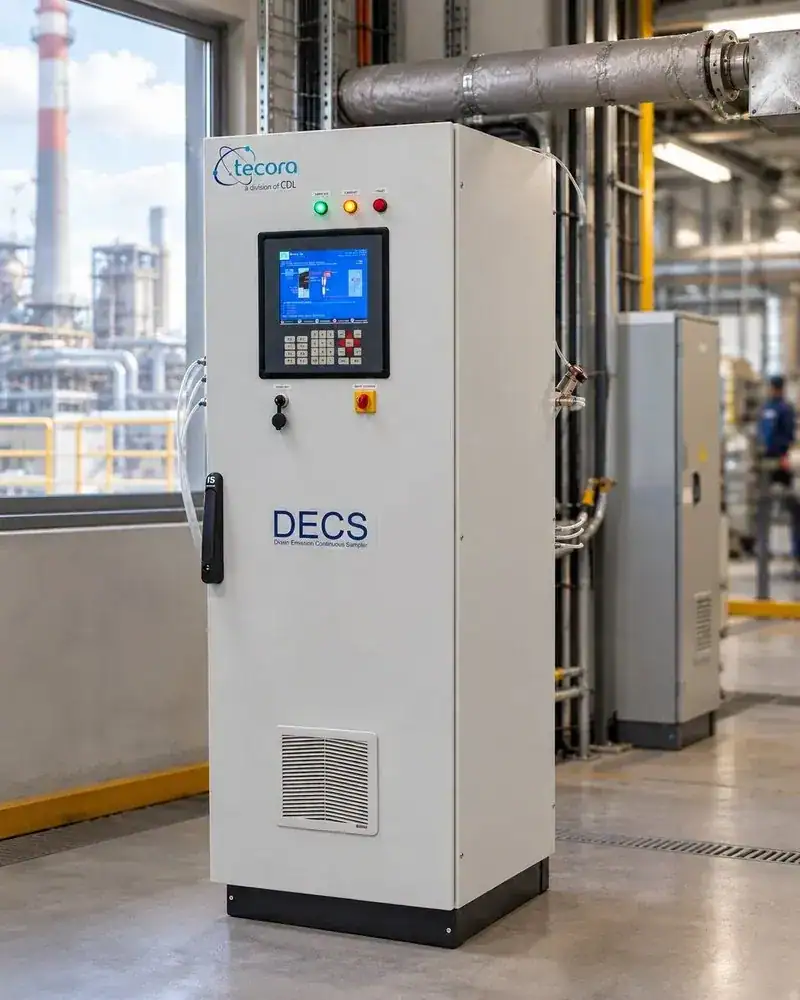
CDL-Tecora's DECS is designed for continuous sampling of dioxins, furans (PCDD/PCDF), PCBs and other persistent organic pollutants, and documented as compliant with both the European standard EN 1948 and its American equivalent USEPA Method 23. This dual standards compliance makes it a concrete example of meeting the first two criteria presented above: it allows a measurement campaign to be covered whatever reference is required by the local supervisory authority, without having to qualify different equipment for each site, an asset for industrial groups operating under several jurisdictions.

Summary

Key takeaways

  • Check explicit standards compliance

    Require the precise reference in the documentation (EN 1948-1/2/3 and/or USEPA Method 23, 40 CFR Part 60 Appendix A), never a generic formula.

  • Define the real need before comparing offers

    One-off check (short term) or representative long-term monitoring (long term): the need directly guides the choice of configuration.

  • Examine the materials in contact with the sample

    Inert glass, PTFE and stainless steel, with no retention zone (seals, fittings) likely to hold traces of organochlorines.

  • Test how easy it is to clean between two campaigns

    Complete, rapid dismantling limits the risk of cross-contamination, especially in the case of back-to-back campaigns at several sites.

  • Check control of the adsorbent resin temperature

    The system must keep the resin (XAD-2 type) below 50°C continuously throughout the sampling, including in the long term.

  • Ask about consumables availability

    Resin cartridges, filters: ask for replenishment lead times before committing.

  • Ask for accredited customer references

    Favour an instrument already used by laboratories or inspection bodies operating under accreditation.

  • Anticipate consistency with the rest of the measurement chain

    Compatibility with the other equipment used during the same campaign (gas conditioning, temperature control) to simplify logistics and maintenance.

Go further

Related standards

What we offer

Recommended instruments

Frequently asked

FAQ

Questions about this topic? Here are the most common answers.

Another question?
Should an EN 1948 or USEPA Method 23 compliant sampler be preferred?+

It depends on the site's jurisdiction and the reference required by the authority receiving the report. For an industrial group operating in several countries, an instrument documented as compliant with both references avoids having to qualify different equipment for each site concerned.

Can the same instrument cover both short-term and long-term sampling?+

Some instruments, such as CDL-Tecora's DECS, are designed to cover both uses depending on the configuration chosen. Always check explicitly in the technical documentation which configuration corresponds to which use, rather than assuming automatic coverage.

Why is the adsorbent resin temperature such an important selection criterion?+

The XAD-2 resin used to trap dioxins must remain below 50°C at all times throughout sampling: above that, it degrades thermally and the sample is invalidated. An instrument unable to guarantee this control continuously, notably over the long durations of long-term sampling, exposes you to the risk of a full re-campaign.

Which materials should be preferred to limit the risk of cross-contamination?+

Glass, PTFE and stainless steel of suitable grade are the reference materials for surfaces in contact with the sample. Avoid porous materials or seals likely to adsorb traces of organochlorine compounds from one campaign to the next.

Should I choose an automated instrument or is manual sampling enough?+

It depends on the frequency of campaigns and the budget available. Automated operation reduces the risk of operator error on critical parameters (isokinetic flow rate, temperature), but represents a larger initial investment, a question to assess with the partner laboratory according to the planned volume of campaigns.

Which questions should I ask a supplier first before buying?+

The precise standards reference covered by the instrument, the exact nature of the materials in contact with the sample, the recommended cleaning protocol, the availability of consumables and feedback from already accredited customers using the device.

Is CDL-Tecora's DECS suitable for use outside Europe?+

Yes: the DECS is documented as compliant with both the European standard EN 1948 and its American equivalent USEPA Method 23, which allows it to be used for campaigns carried out under either reference depending on the requirement of the local authority.

A project to scope? Our experts can help.

Personalised advice and a fast quote for your measurement project.