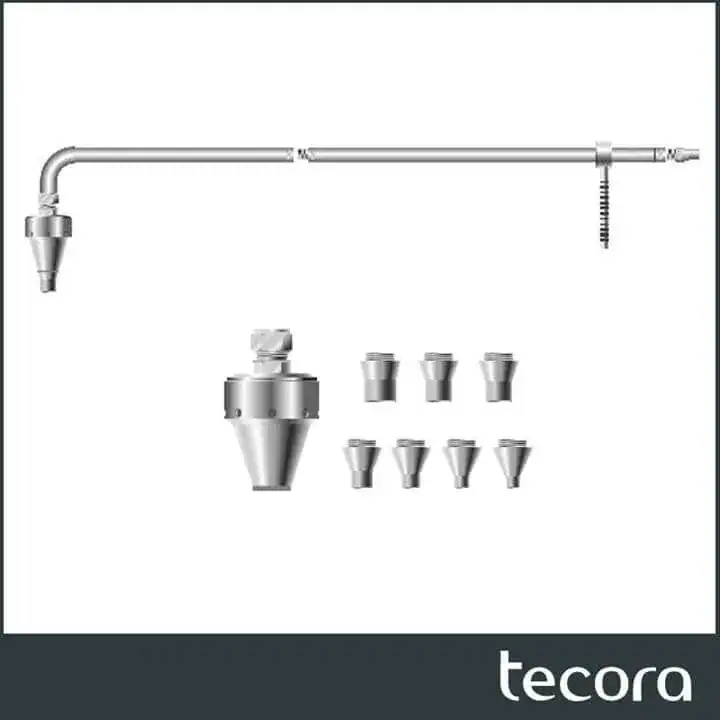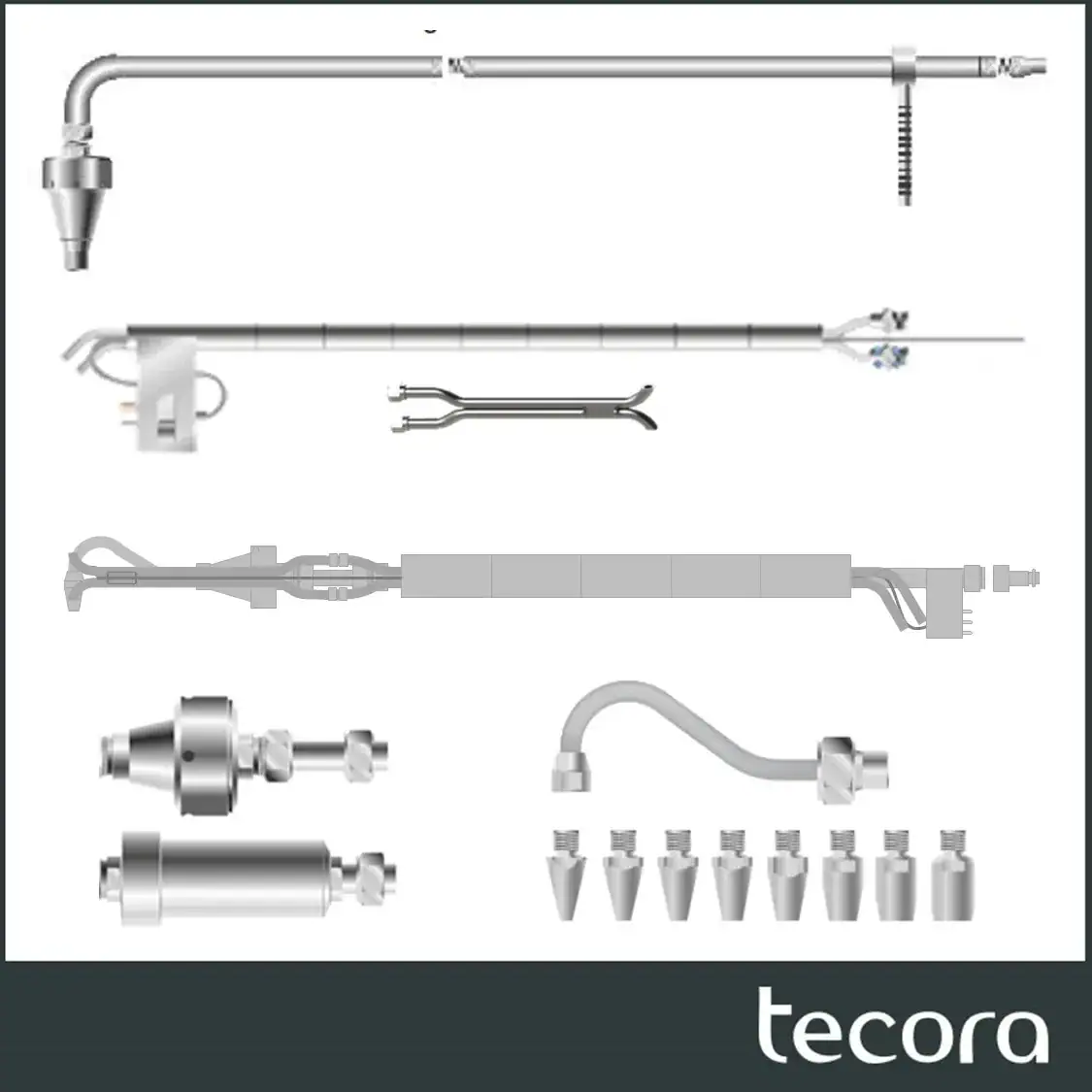
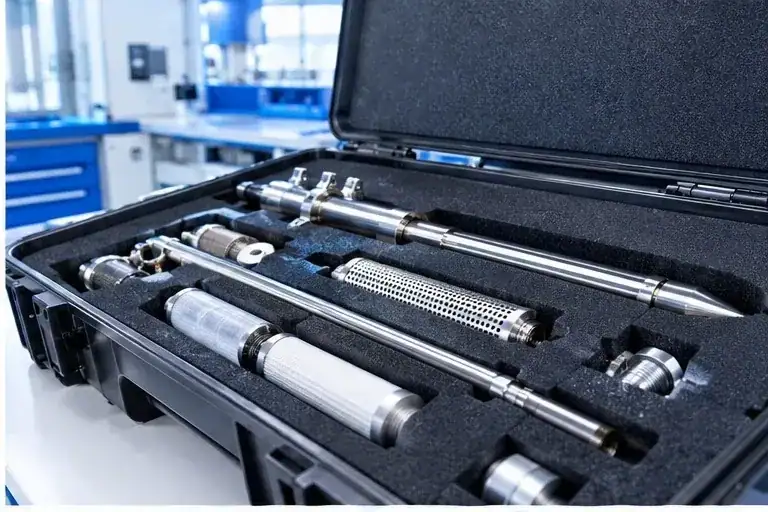
Modular isokinetic sampling probe with interchangeable sections in its carrying case

International equivalences · Dust & particulates · Dioxins, furans & POPs

US EPA Method 5 & Method 23: Particulates and Dioxins/Furans (American Reference)

The American reference methods for particulate matter (Method 5) and dioxins/furans (Method 23) in channelled emissions

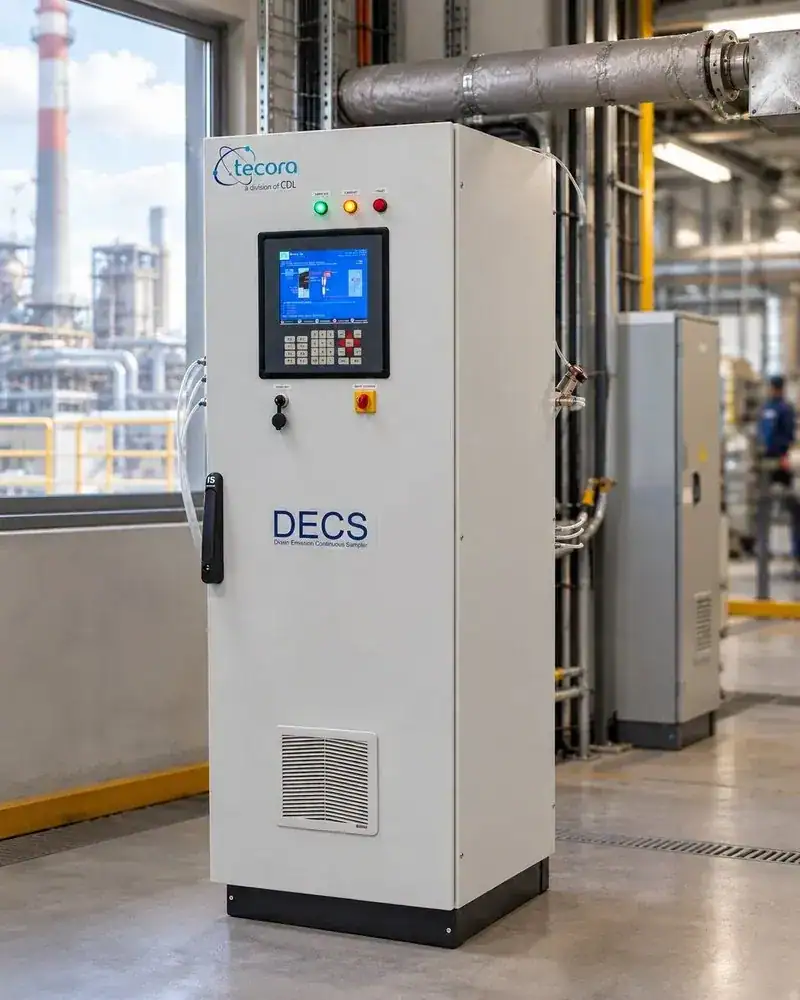
US EPA Method 5 and US EPA Method 23 are two reference methods of the US Environmental Protection Agency used on stationary sources: Method 5 determines the concentration of particulate matter by isokinetic sampling with out-of-stack filtration, while Method 23 determines dioxins, furans and dioxin-like PCBs by sampling on XAD-2 resin followed by analysis by gas chromatography coupled with high-resolution mass spectrometry (HRGC/HRMS). Method 5 is to be distinguished from its sister method US EPA Method 17, which filters particulate matter directly in the duct ("in-stack"): these are the methods documented by CDL-Tecora's isokinetic probes. For dioxins, on the other hand, CDL-Tecora's DECS is explicitly compliant with Method 23, the recognised American equivalent of the European standard EN 1948.

Key figures

  • 40 CFR 60, App. AReference framework
  • 120°C ± 14°C (out-of-stack)Method 5 filter
  • HRGC/HRMS (Method 8290)Method 23 analysis
The reference methods of the US EPA (United States Environmental Protection Agency) for controlling stationary source emissions are codified in 40 CFR Part 60, Appendix A.

Method 5: out-of-stack filtration

Isokinetic sampling, glass fibre filter at 120°C ± 14°C in an external housing, condensable fraction recovered by bubbling

Method 17: in-stack variant

Same isokinetic principle as Method 5, but filtration directly in the duct at flue gas temperature, the only structural difference between the two methods

Modular isokinetic sampling probe with interchangeable sections in its carrying case
Method 5 defines there the determination of the concentration of particulate matter ("Determination of Particulate Matter Emissions from Stationary Sources"): a gas sample is taken isokinetically (at a suction velocity equal to that of the gas stream in the duct, so as not to bias the fraction of particles captured according to their size) then filtered on a glass fibre filter maintained at a controlled temperature of 120 °C ± 14 °C, in a filter housing placed outside the duct ("out-of-stack").
The mass of filterable particulate matter is determined by gravimetry after removal of uncombined water; the condensable fraction, which passes through the filter in gaseous form before condensing in the impingers downstream, is recovered separately by extraction with dichloromethane and then evaporated to constant weight.

Method 23: dioxins, furans and PCBs

Sampling on XAD-2 resin (<50°C), HRGC/HRMS analysis according to EPA Method 8290, recognised American equivalent of EN 1948

40 CFR Part 60 regulatory framework

All three methods are codified in Appendix A of the US EPA reference methods for new stationary sources

On the ground

Points to watch

Do not confuse Method 5 and Method 17 in a specification

Both methods measure particulate matter isokinetically, but an American client may require one or the other by name: check which is explicitly required before choosing the probe configuration (in-stack filter or heated out-of-stack housing).

Control the heated line up to the filter for Method 5

Unlike Method 17, Method 5 requires the filter to be kept at 120°C ± 14°C in an external housing: any drop in temperature along the probe-to-filter path alters the filterable fraction actually captured.

Respect the 50°C limit on the XAD-2 resin

As with EN 1948, exceeding the temperature on the XAD-2 module during Method 23 sampling degrades the resin and invalidates the sample, a field checkpoint never to be neglected on a long campaign.

Check the isokinetic ratio continuously

Non-isokinetic sampling biases the fraction of particles captured (and, indirectly, the fraction of dioxins adsorbed on them): the ratio check must be documented throughout the campaign, for Method 5/17 as for Method 23.

Require HRGC/HRMS analysis, not low-resolution GC-MS

Method 23 accepts only results obtained by high-resolution mass spectrometry (EPA Method 8290): a laboratory using low-resolution GC-MS cannot produce a compliant result, whatever the quality of the sampling.

Go further

Related standards

Frequently asked

FAQ

Questions about this standard? Here are the most common answers.

Another question?
What is the difference between US EPA Method 5 and Method 17?

Both methods sample particulate matter isokinetically and share the same field mechanics. The only documented structural difference is the filter location: Method 5 filters outside the duct, in a housing maintained at 120°C ± 14°C, whereas Method 17 filters directly in the duct, at flue gas temperature.

Do CDL-Tecora's isokinetic probes (EN 13284-1 and Instack) comply with Method 5?

These probes are documented as compliant with EN 13284-1, ISO 9096 and US EPA Method 17, not Method 5. Both US EPA methods rely on the same isokinetic principle, but the product compliance formally established by CDL-Tecora relates to Method 17; a site explicitly requiring Method 5 must check this point before committing.

What does US EPA Method 23 measure and how does it compare with EN 1948?

Method 23 determines PCDD/PCDF (dioxins, furans) and dioxin-like PCBs from an isokinetic sampling train on XAD-2 resin, analysed by HRGC/HRMS. Its architecture and principle are very close to EN 1948-1/2/3, which makes it the recognised American equivalent of the European standard.

Why is the XAD-2 resin temperature a critical point in Method 23?

Above 50°C, the XAD-2 resin degrades thermally, which compromises the integrity of the sampling and invalidates the sample. This threshold must be monitored continuously throughout the campaign, just as for an EN 1948 sample.

Can Method 5/17 and Method 23 be used in the same measurement campaign?

Yes, they are two independent protocols targeting different pollutants (particulate matter for Method 5/17, dioxins and furans for Method 23) and can be carried out in parallel on the same duct with separate sampling trains, as is also the case between EN 13284-1 and EN 1948.

What is the regulatory framework for these US EPA methods?

Method 5, Method 17 and Method 23 are codified in 40 CFR Part 60, Appendix A, which brings together the reference methods for controlling emissions from new stationary sources (New Source Performance Standards) in the United States.

Preparing a measurement campaign? Our experts can help.

Personalised advice, a fast quote and technical support to choose the right instrument for this standard.