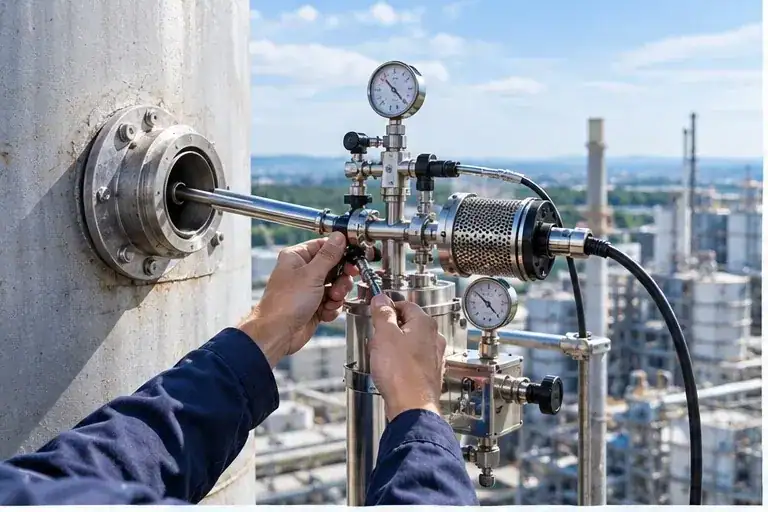
Technician adjusting an isokinetic sampling probe at a stack measurement point

Dust & particulates

EN 13284-1: Determination of Low Range Mass Concentration of Dust

Manual gravimetric reference method for low dust concentrations in channelled emissions

The EN 13284-1 standard ("Stationary source emissions: Determination of low range mass concentration of dust, Part 1: Manual gravimetric method") is the standardised reference method (SRM) for measuring dust concentrations below 50 mg/Nm³ in the emission ducts of stationary sources. It relies on isokinetic sampling of the gaseous effluent through a tared filter, weighed before and then after drying to determine the mass of dust captured. It is the method against which automatic continuous dust monitors (AMS) must be compared to be qualified as an equivalent method under EN 14181.

Key figures

  • EN 13284-1:2017Standard
  • < 50 mg/Nm³Target range
  • ISO 9096 / USEPA 17Equivalences
EN 13284-1 was developed and validated primarily for the flue gases of waste incineration plants, a sector where dust emission limit values are particularly low, but its use has become widespread across all stationary sources subject to a particulate monitoring obligation (cement works, combustion plants, various industrial processes), including at higher concentrations than its original scope of validation. The version currently in force, published in 2017, replaces the 2001 version and keeps the same part number: it must not be confused with EN 13284-2, which covers automated measuring systems (AMS) and not the manual reference method.

Manual gravimetric method (SRM)

Standardised reference method for low dust concentrations, below 50 mg/Nm³, in emission ducts

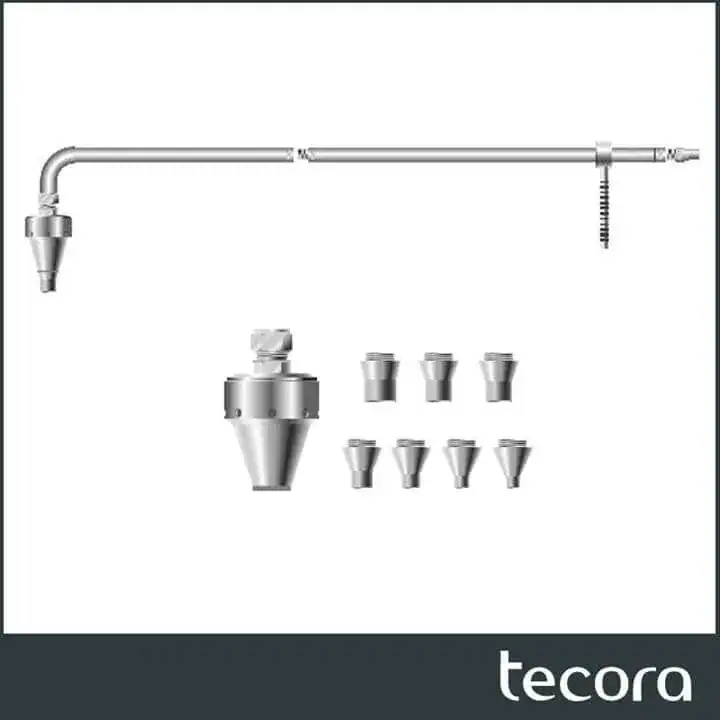
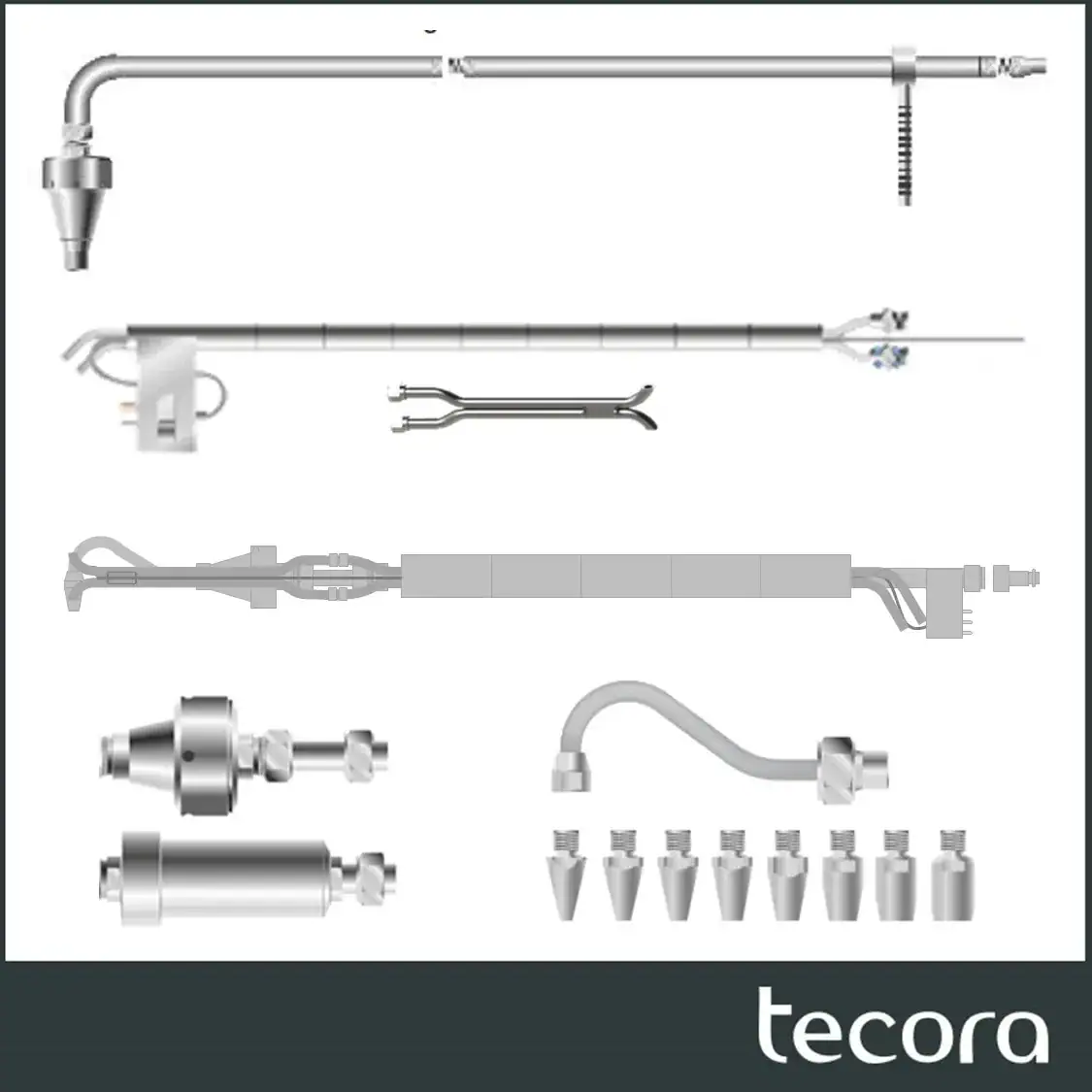
Isokinetic sampling compliant with EN 15259

Probe positioned at the measurement points defined by EN 15259, suction rate adjusted to the local gas velocity

In-stack or out-of-stack filter

Particles captured on a tared filter, weighed before and then after drying; the mass deposited gives the concentration

Reference for automatic monitors

Mandatory comparison method (QAL2, EN 14181 / EN 13284-2) to qualify a dust AMS as equivalent; equivalent to ISO 9096 and US EPA Method 17

On the ground

Points to watch

Establish the sampling plan before any campaign

The number of measurement points, their position and the required duct diameters are set by EN 15259 according to flow homogeneity; a poorly sized plan undermines the representativeness of the sample even before weighing.

Control the isokinetic ratio continuously

A suction rate that is too high or too low compared with the local gas velocity over- or under-samples the coarsest particle fractions, which directly skews the measured concentration.

Choose the filtration mode according to duct conditions

In-stack filtration suits dry, moderately hot effluents; where there is moisture or a risk of condensation, a heated out-of-stack filter holder avoids particle losses and weighing bias caused by condensation in the line.

Weighing rigour in the laboratory

The masses of dust collected are small (in the order of a milligram): humidity conditioning of the filter before and after drying, precise taring and field blanks are essential so that the result is not lost in weighing uncertainty.

Plan enough parallel samples for an AMS

During a QAL2 procedure (EN 14181 / EN 13284-2), the calibration function of an automatic dust monitor is built from a series of EN 13284-1 samples taken in parallel on the same duct, not from a single measurement.

Go further

Related standards

Frequently asked

FAQ

Questions about this standard? Here are the most common answers.

Another question?
What exactly does the EN 13284-1 standard measure?

EN 13284-1 defines the manual reference method (gravimetric method) for determining the mass concentration of dust in a stationary source emission duct, in particular for low concentrations below 50 mg/Nm³. It describes isokinetic sampling, filtration of the particles and their quantification by weighing the filter before and after drying.

What is the difference between EN 13284-1 and EN 13284-2?

EN 13284-1 is the manual reference method (isokinetic sampling and gravimetric weighing) used for a spot check or to qualify another instrument. EN 13284-2 covers automatic continuous dust monitors (AMS) permanently installed on a duct: in conjunction with EN 14181, it defines the test requirements (QAL1) and the calibration and monitoring procedures (QAL2, QAL3, annual surveillance test) for these devices, by comparing them with the EN 13284-1 reference method.

Are EN 13284-1 and ISO 9096 the same method?

Both standards cover the same subject (the manual gravimetric determination of the mass concentration of dust in stationary source emissions) with an almost identical isokinetic sampling and weighing principle. ISO 9096 is the international reference standard and EN 13284-1 its European equivalent; they are widely recognised as interchangeable for regulatory compliance purposes, although a site should check which one is explicitly required by its supervisory authority.

What is isokinetic sampling and why is it essential for dust?

Isokinetic sampling means drawing the gas sample at a velocity equal to the local flow velocity in the duct. For dust, this condition is essential: a suction rate that is too high preferentially captures fine particles, while one that is too low over-represents coarse particles through inertia; in either case, the particle size distribution and the measured concentration no longer faithfully reflect what is actually emitted.

How is an automatic dust monitor (AMS/CEMS) validated against EN 13284-1?

Under the EN 14181 framework and its dust-specific counterpart EN 13284-2, the QAL2 procedure establishes the calibration function of an AMS by comparing, in parallel and on the same duct, its continuous measurements with a series of samples taken in accordance with EN 13284-1. It is this direct comparison that allows the automatic monitor to be qualified as equivalent to the reference method before it is put into service for continuous regulatory monitoring.

Is EN 13284-1 equivalent to the US EPA Method 17?

US EPA Method 17 is the American in-stack filtration method, also isokinetic, for measuring dust in stationary source emissions. It is based on a principle very close to EN 13284-1 and ISO 9096, and manufacturers of sampling instruments generally design their isokinetic probes to meet all three references simultaneously, an asset for industrial groups operating under several jurisdictions.

Preparing a measurement campaign? Our experts can help.

Personalised advice, a fast quote and technical support to choose the right instrument for this standard.