
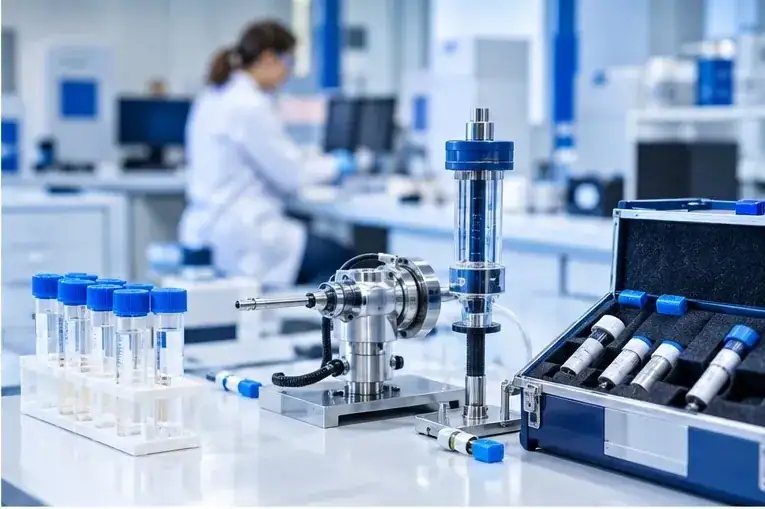
Laboratory
Laboratories & Inspection Bodies
Field instrumentation and consumables for accredited bodies
Accredited analysis laboratories and inspection bodies (COFRAC, ISO/IEC 17025) carry out on-site measurement campaigns on behalf of third parties: industrial hygiene, air quality, emissions. Every result delivered to the client must be traceable, from the calibration of the sampling instrument to laboratory analysis. CDL-Tecora supplies them with both the field instruments (samplers, personal sensors) and the associated laboratory consumables.
Key facts
- ISO/IEC 17025Accreditation framework
- Field + laboratoryDual competence
Field instruments
CIP10 personal samplers, CAThiA sampling heads, sound level meters and dosimeters
Laboratory consumables
Glassware, reagents and standards associated with the analyses carried out after sampling
Metrological traceability
A structuring end-to-end requirement for any ISO/IEC 17025:2017 accreditation
Measurement uncertainty
Estimation and justification of the uncertainty specific to each accredited method
Proficiency testing and scope of accreditation
Inter-laboratory comparisons and compliance with the scope granted by COFRAC
Sector challenges
Business challenges
End-to-end traceability
From the calibration of the field instrument to the delivery of the result to the client, each step must be documented and verifiable to meet the requirements of ISO/IEC 17025:2017 accreditation.
Variety of campaigns
The same organisation may work in industrial hygiene, regulatory emissions measurements or ambient air quality, each time with different instruments, consumables and uncertainty calculation methods.
Fragmented supply
Multiplying suppliers between field instruments and laboratory consumables complicates logistics and the management of calibration and conformity certificates.
Measurement uncertainty to be controlled
Each method covered by the accreditation must be accompanied by an estimated and justified measurement uncertainty, failing which the validity of the result delivered to the client may be called into question.
Maintaining and extending the scope of accreditation
Adding a method or parameter to its COFRAC accreditation scope requires documenting the traceability and performance of the instruments and consumables used for the new method.
What we offer
Our solutions for this sector
The CDL-Tecora families most used in this sector — click to see all the instruments in the family.


Regulatory framework
Applicable standards and regulations
ISO/IEC 17025:2017
General requirements for the competence of testing and calibration laboratories; a revision of the 2005 version, it notably strengthens the risk-based approach and metrological traceability.
ISO/IEC 17043
General framework for the competence of proficiency testing providers between laboratories.
FAQ
Have questions about this sector? Here are the most frequent answers.
Another question?Why does CDL-Tecora supply both field instruments and laboratory consumables?
Because accredited laboratories and inspection bodies need both to cover the whole chain of a measurement campaign, from on-site sampling to laboratory analysis, with documented traceability at each step.
Is the CAThiA suitable for regulatory asbestos inspection campaigns?
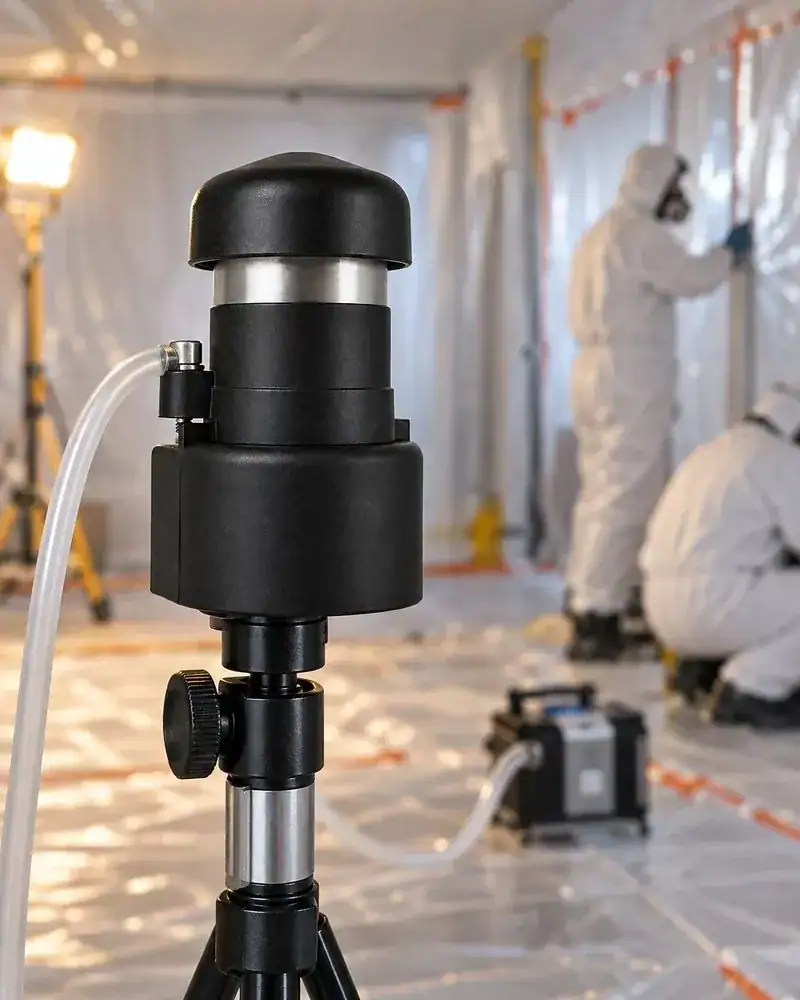
Yes, the CAThiA is a static sampling head for dust and fibres in ambient air, designed for this type of measurement in regulatory inspection campaigns.
What is measurement uncertainty and why is it important for an accredited laboratory?
Measurement uncertainty quantifies the interval within which the true value of a result has a statistically high probability of lying. A laboratory accredited to ISO/IEC 17025:2017 must estimate and justify this uncertainty for each method covered by its accreditation, because it determines the ability to state whether or not a result complies with a limit value.
What is proficiency testing?
Proficiency testing consists of having the same sample analysed, or the same type of measurement carried out, by several laboratories independently, then comparing the results obtained. This inter-laboratory comparison allows an accredited laboratory to demonstrate that its competence is maintained over time.
What is the scope of accreditation issued by COFRAC?
The scope of accreditation lists precisely the methods, parameters and measuring ranges for which a laboratory is recognised as accredited by COFRAC. A laboratory cannot rely on its ISO/IEC 17025 accreditation for a test that does not appear in this scope.
Can the CIP10 be used for regulatory industrial hygiene measurements?
The CIP10 is a personal dust sampler designed for assessing occupational exposure in the field, in industrial hygiene campaigns carried out by accredited bodies or prevention services.
Are CDL-Tecora sound level meters and dosimeters suitable for noise measurements in industrial environments?
Yes, these field instruments are intended for noise measurement campaigns in industrial environments, whether a spot measurement with a sound level meter or individual noise exposure monitoring with a dosimeter.

A project in this sector? Our experts are ready to help.
Personalised advice, a fast quote and technical support to choose the solution suited to your challenge.