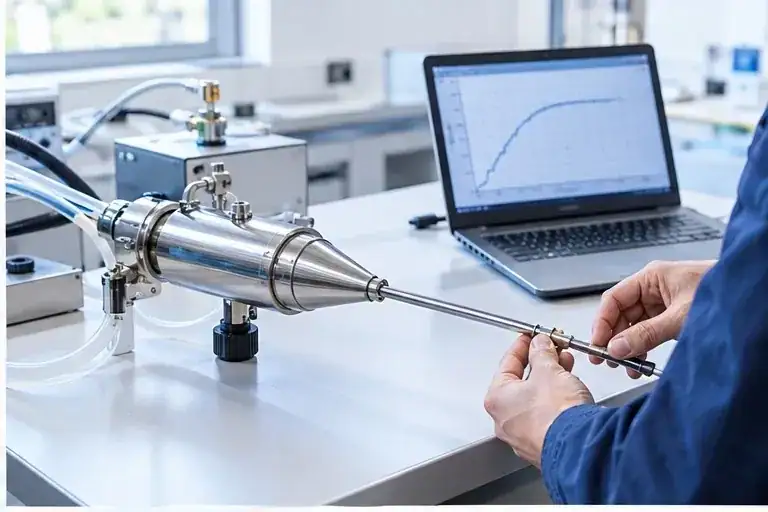
Laboratory calibration of an isokinetic sampling probe, laptop displaying a flow curve

International equivalences · Dust & particulates

ISO 9096: Manual Determination of Mass Concentration of Particulate Matter

The international equivalent of the European reference method for the gravimetric measurement of dust from stationary sources

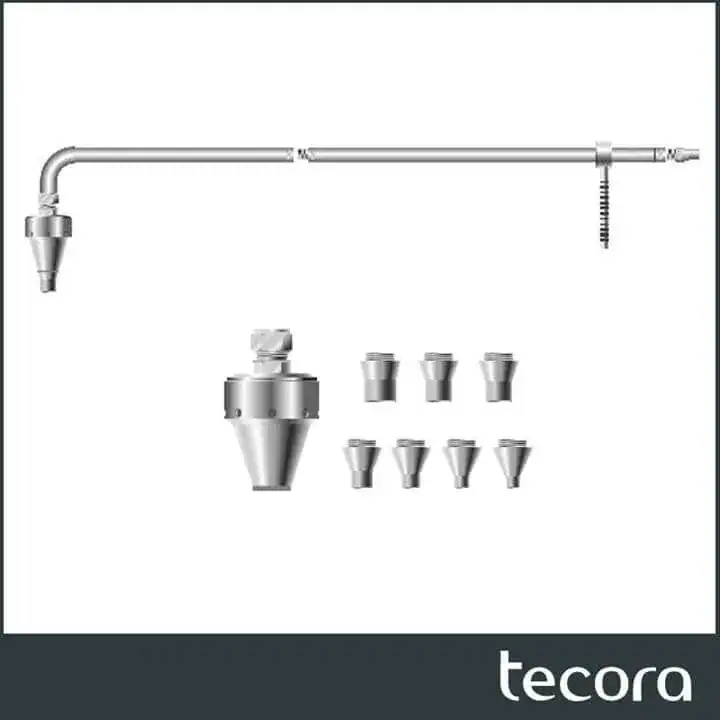
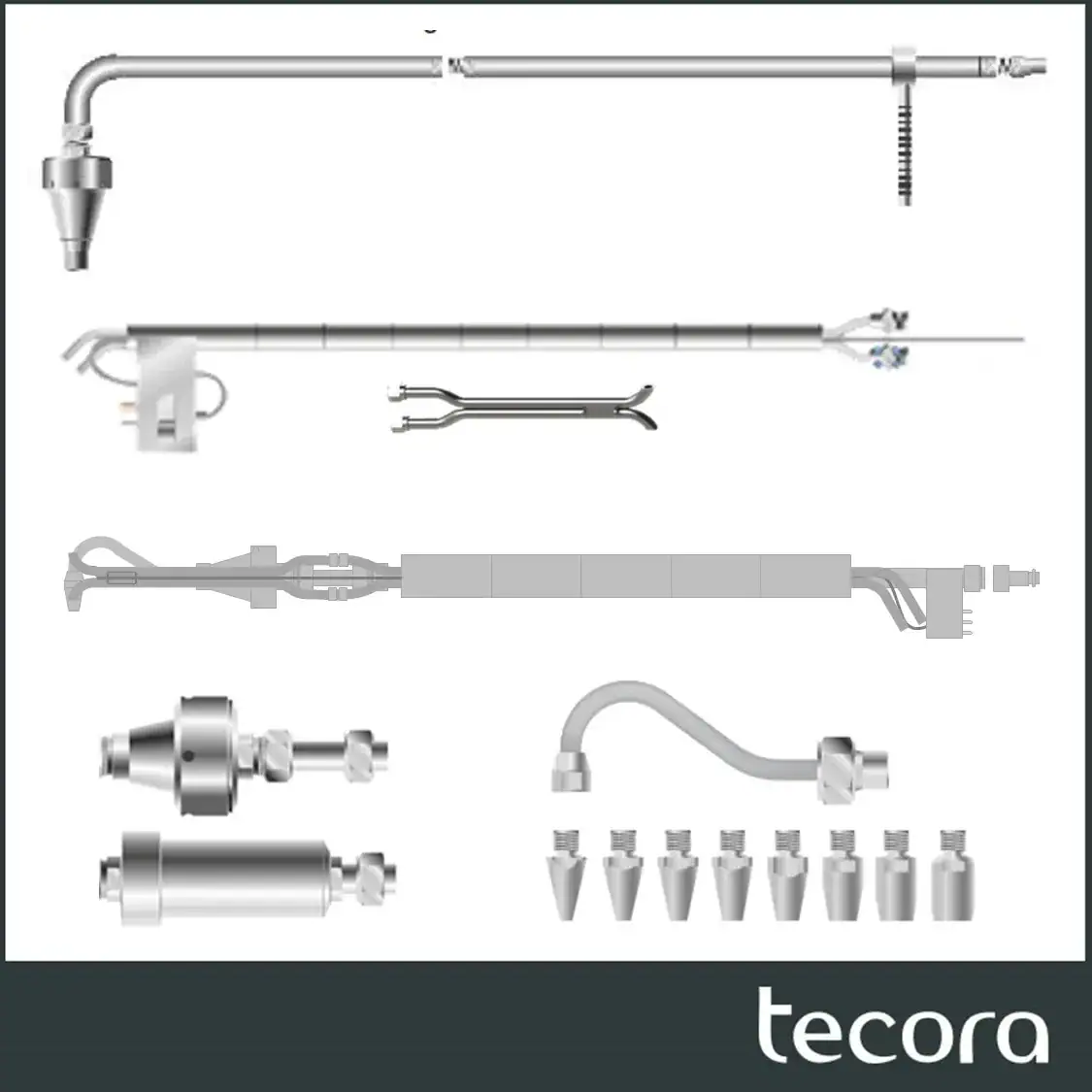
ISO 9096 is the international reference standard for the manual determination of the mass concentration of particulate matter (dust) in channelled emissions from stationary sources, by isokinetic sampling and gravimetric weighing of the filter. Developed in close coordination with the European Committee for Standardization, it relies on the same principle as the European standard EN 13284-1 but is the reference used outside the European Union and by international industrial groups that want a single protocol recognised across all their sites, whatever the country. CDL-Tecora offers isokinetic sampling probes explicitly compliant with ISO 9096, EN 13284-1 and US EPA Method 17.

Key figures

  • ISO 9096:2017Standard
  • International reference (outside the EU)Scope
  • 20 à 1 000 mg/m³Measured range
ISO 9096 is published by technical committee ISO/TC 146 (Air quality), subcommittee SC 1 dedicated to stationary source emissions. Its current version, ISO 9096:2017, is the third edition of the standard: it replaces ISO 9096:2003 (itself derived from a first version dating from 1992 with a different title) and notably corrects certain isokinetic criteria values and calculation formulae.

Gravimetric isokinetic sampling

Same measurement principle as EN 13284-1: isokinetic probe, in-stack or out-stack filtration, filter weighing

Standardised measuring range

From 20 mg/m³ to 1,000 mg/m³ of particles under standard conditions

Reference for AMS calibration

Manual method used to calibrate and validate automated measuring systems installed for continuous operation

Joint ISO/CEN development

Close coordination with EN 13284-1, with ISO 9096 placing particular emphasis on high-volume sampling techniques

Laboratory calibration of an isokinetic sampling probe, laptop displaying a flow curve
Its scope covers the measurement of particles in waste gases at concentrations between 20 mg/m³ and 1,000 mg/m³ under standard conditions, and it also serves as the reference method for the calibration and validation of automated measuring systems (AMS) permanently installed on ducts, a role comparable to that played by EN 13284-1 within the EN 14181 quality assurance framework (QAL2/AST) in the European Union.

On the ground

Points to watch

Confirm the exact reference required before the campaign

ISO 9096, EN 13284-1 and US EPA Method 17 rely on the same isokinetic principle but are not identical documents: checking which one is explicitly named by the supervisory authority or the client avoids any dispute over the test report.

Choose the in-stack or out-stack configuration suited to the gas

The presence of unstable, reactive or semi-volatile compounds in the effluent and the filtration temperature selected determine the choice between filtration directly in the duct or on a heated line outside; a wrong choice biases the gravimetric result.

Strictly control the isokinetic ratio

Sampling that is too fast or too slow compared with the actual velocity of the gas stream over- or under-samples certain particle fractions according to their size distribution, skewing the measured concentration.

Consider high-volume sampling for low concentrations

To reach the detection limit on lightly loaded emissions without extending the campaign duration excessively, ISO 9096 highlights sampling at a higher flow rate over a conventional duration rather than simply extending the sampling time.

Favour a multi-reference instrument for international sites

An industrial group operating in several countries benefits from standardising on a probe that complies simultaneously with ISO 9096, EN 13284-1 and US EPA Method 17, rather than qualifying different equipment for each geographical area.

Go further

Related standards

Frequently asked

FAQ

Questions about this standard? Here are the most common answers.

Another question?
What is the ISO 9096 standard and what is it used for?

ISO 9096 is the international reference method for the manual determination of the mass concentration of particulate matter (dust) in channelled emissions from stationary sources, by isokinetic sampling and gravimetric weighing. It is used both for one-off regulatory checks and for the calibration and validation of automated measuring systems (AMS) installed for continuous operation.

Are ISO 9096 and EN 13284-1 the same standard?

They rely on the same gravimetric isokinetic sampling principle and were developed jointly by ISO/TC 146/SC 1 and CEN/TC 264, but they are not strictly identical documents: ISO 9096 places additional emphasis on high-volume sampling techniques. EN 13284-1 applies in the European Union, while ISO 9096 serves as the international reference, notably outside the EU.

What concentration range does ISO 9096 cover?

The standard covers the measurement of particles in waste gases at concentrations between 20 mg/m³ and 1,000 mg/m³ under standard conditions.

What is the high-volume sampling that ISO 9096 highlights?

It is a technique of sampling at a higher flow rate over a conventional duration, rather than extending the sampling duration at a conventional flow rate, in order to reach the required detection limits on emissions lightly loaded with particles, an option that ISO 9096 highlights more than EN 13284-1 does.

Should I use ISO 9096 or EN 13284-1 for my site?

It depends on the applicable regulatory or contractual framework: a site located in the European Union generally refers to EN 13284-1, whereas a site outside the EU, or an international industrial group wanting a reference recognised across all its locations, refers to ISO 9096. If in doubt, explicitly check which standard is named by the supervisory authority or the end client.

Which CDL-Tecora instruments comply with ISO 9096?

The EN 13284-1 isokinetic probe (EN 13284-1 Probe) and the Instack, a non-heated isokinetic sampling probe dedicated to dust measurement campaigns, both comply with ISO 9096, EN 13284-1 and US EPA Method 17.

Preparing a measurement campaign? Our experts can help.

Personalised advice, a fast quote and technical support to choose the right instrument for this standard.