Combustion
Cement Industry
Emissions monitoring and clinker firing optimisation
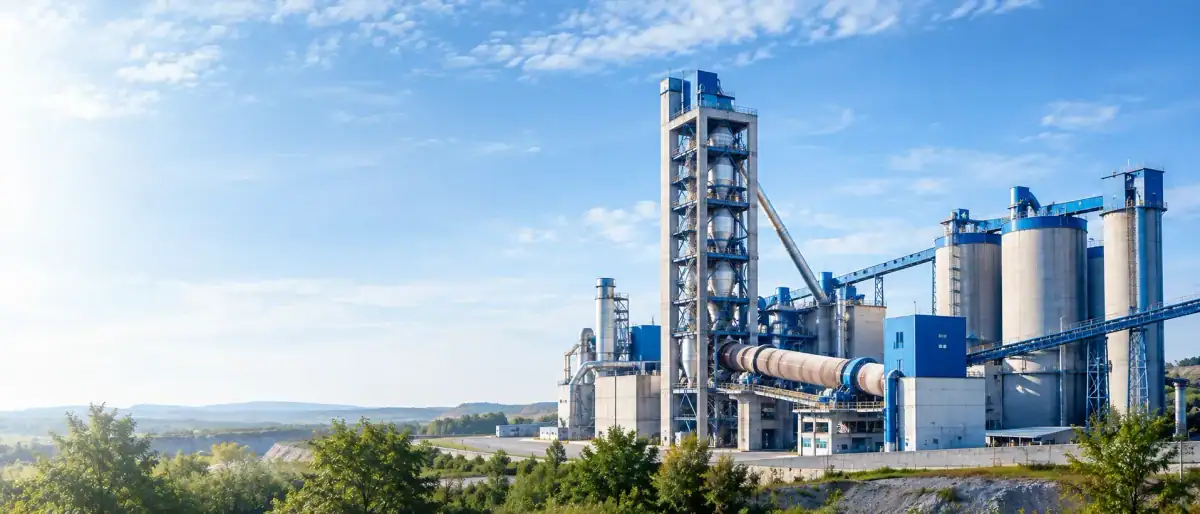
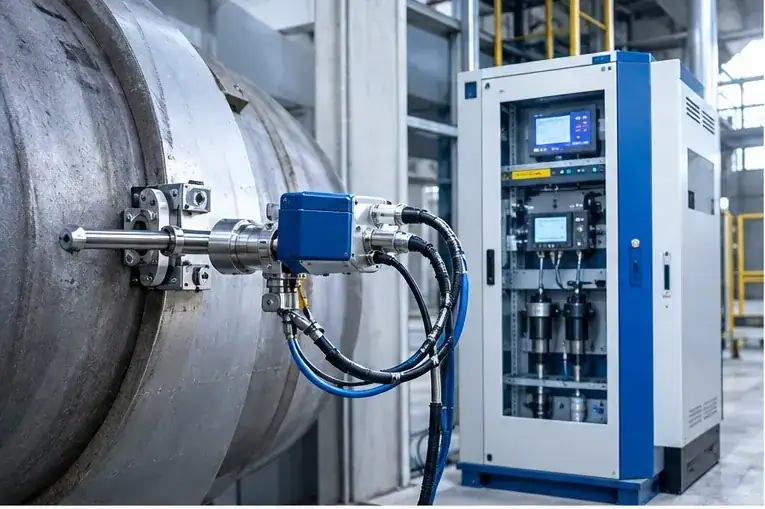
Cement works combine very-high-temperature firing, alternative fuels and materials (waste co-processing), NOx reduction by SNCR and heavy dust loads: a demanding context for combustion and emissions measuring instruments. CDL-Tecora supplies probes and analysers suited to these severe conditions, from rotary burner control to regulatory monitoring at the kiln outlet.
Key facts
- > 1 400 °CFiring temperature
- Cement BREF (IED)Sector reference document
- Monitored substitutionAlternative fuels
Alternative fuels
Growing thermal substitution by waste and biomass, under enhanced monitoring
Co-processing and material recovery
Certain residues replace the natural raw materials in the raw meal, in addition to their use as fuel
Heavy dust loads
Robust instruments designed to operate continuously in a dust-laden environment
NOx reduction by SNCR
Injection of ammonia or urea into the hot gases, with a slip risk to monitor if dosing is poorly adjusted
Rotary burner control
Controlled air/gas ratio for flame stability and energy efficiency
Sector challenges
Business challenges
Thermal substitution by waste
The growing use of alternative fuels (waste, biomass, tyres) brings some cement works closer to the monitoring thresholds applicable to waste-to-energy plants (dioxins, heavy metals), with an inspection frequency that depends directly on the rate of thermal substitution achieved on the site.
Traceability of material co-processing
Co-processing waste as an alternative raw material in the raw meal requires strict control of the composition of inputs, so as not to degrade clinker quality or introduce undesirable pollutants, an issue distinct from thermal substitution but just as sensitive for the site's compliance.
Severe dust loading
Instruments installed at the kiln outlet must withstand high dust concentrations without measurement drift, failing which the data sent to the supervisory authorities will be durably skewed.
Control of ammonia slip
A poorly calibrated SNCR system can let unconsumed ammonia pass into the discharged gases; this secondary emission must be monitored in order to adjust the reagent dosing as closely as possible to the actual NOx reduction requirement, without unnecessary excess reagent.
Burner stability and production continuity
A poorly adjusted air/fuel ratio degrades clinker quality and increases the kiln's energy consumption; as a cement kiln cannot easily be stopped once started, the reliability of monitoring instruments is critical to avoid any unplanned shutdown and the associated production losses.
What we offer
Our solutions for this sector
The CDL-Tecora families most used in this sector — click to see all the instruments in the family.


Regulatory framework
Applicable standards and regulations
Directive 2010/75/EU (IED)
Industrial emissions, emission limit values
Cement, Lime and Magnesium Oxide BREF
Best available techniques (BAT) of the sector
Measurement of low dust concentrations
Quality assurance of automated measuring systems (QAL2/QAL3, AST)
Certification of automated measuring systems (AMS) used for continuous monitoring, a prerequisite before their implementation under EN 14181
FAQ
Have questions about this sector? Here are the most frequent answers.
Another question?Why are cement works increasingly compared with waste-to-energy plants?
Because a growing proportion of them recover waste as alternative fuel, which subjects them to similar monitoring requirements (dioxins, heavy metals) depending on the thermal substitution rate.
What is the difference between energy recovery and material recovery (co-processing)?
Energy recovery means using a waste as fuel, in place of fossil fuel, for the combustion energy it provides to the kiln. Material recovery (or co-processing) is different: certain mineral residues (ash, slag, bottom ash) are incorporated into the raw meal as a substitute for the natural raw materials (limestone, clay) that make up the clinker. The same cement works can practise both forms of recovery in parallel.
What is selective non-catalytic reduction (SNCR) and how does it work?
SNCR is a NOx reduction technique that involves injecting an ammonia or urea solution directly into the hot kiln gases, within a precise temperature window favourable to the reaction, without a catalyst, unlike selective catalytic reduction (SCR).
What is ammonia "slip" and why must it be monitored?
Ammonia slip is the fraction of ammonia injected in an SNCR system that has not reacted with NOx and ends up in the discharged gases. Poorly adjusted reagent dosing increases this phenomenon, which is a secondary emission in its own right, hence the value of monitoring it to fine-tune the injection.
What is the impact of the air/gas ratio on clinker quality?
A poorly adjusted air/gas ratio destabilises the rotary burner flame, which can degrade the uniformity of clinker firing and increase fuel consumption.
Do the measuring instruments withstand the dust levels of a cement works?
CDL-Tecora's instruments for this sector are designed to operate continuously in heavily dust-laden environments, with suitable filtration options.
Why are dioxins and heavy metals measured periodically rather than continuously?
Unlike dust, NOx, SO2 or CO, which are monitored continuously, dioxins/furans and heavy metals are generally checked through periodic measurement campaigns, whose frequency depends in particular on the rate of thermal substitution by alternative fuels.
What is the difference between EN 14181 and instrument certification (EN 15267)?
EN 15267-3 governs the initial certification of an automated measuring system (AMS), that is, the demonstration that the instrument meets the required performance criteria before it is put into service. EN 14181 then governs the quality assurance of that instrument once installed on site, through calibrations and periodic checks (QAL2, QAL3, AST) carried out over time.
Why does the air/fuel ratio also influence the CO content of combustion gases?
A shortage of air relative to fuel leads to incomplete combustion: part of the fuel's carbon is not fully oxidised to CO2 and ends up as CO. Continuous monitoring of CO, together with residual O2, makes it possible to adjust the rotary burner setting to stay within the optimum combustion range, both for clinker quality and for compliance with emission limit values.

A project in this sector? Our experts are ready to help.
Personalised advice, a fast quote and technical support to choose the solution suited to your challenge.