The principle of thermal conductivity detection (TCD)
A thermal conductivity detector (TCD), also called a katharometer, relies on the fact that each gas conducts heat differently: hydrogen conducts heat far better than nitrogen, for example. The concentration of a component is deduced from the change in the thermal conductivity of the mixture.
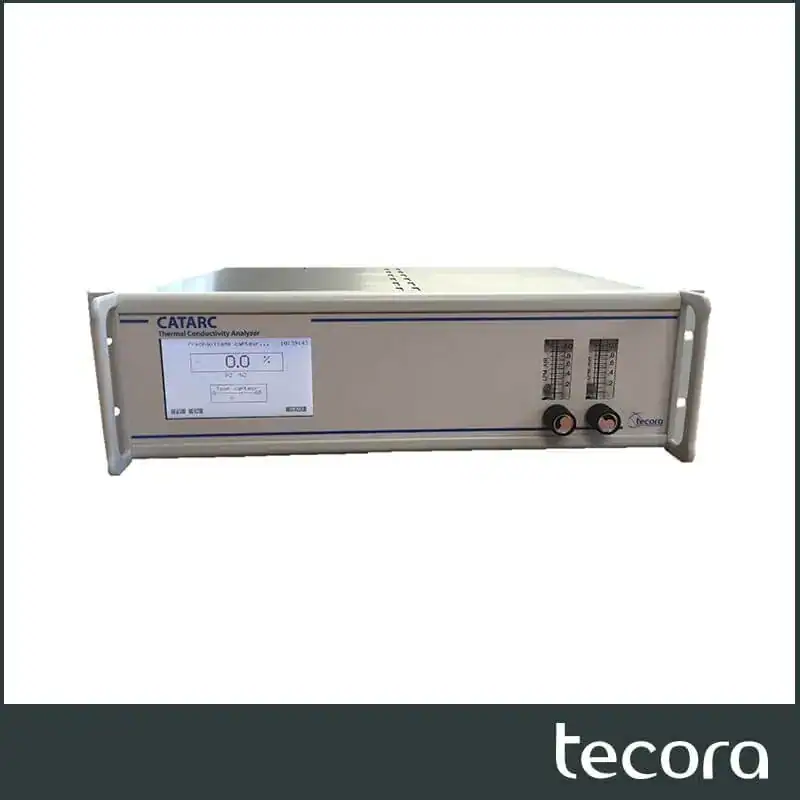
In the CATARC MP analyzer, the detection cell consists of two thermistors mounted in opposition in a Wheatstone bridge, which allows continuous monitoring of mixtures such as H2/N2, He/N2 or SF6/air.
Which gas mixtures can be analysed?
The method suits binary mixtures and, more broadly, a complex mixture when the target component has a thermal conductivity very different from the others. Applications cover gas purity control and hydrogen analysis in industrial processes.
The CATARC MP analyzer in practice
The [CATARC MP](/en/produits/combustion/controle-purete-hydrogene-melanges-gazeux-binaires/) has a touchscreen that shows the gas content, analogue output ranges, temperature control and alarm status. It stores 350 values (SRAM extension optional) with full traceability of alarms, errors, calibrations and configurations, available through the parallel port (printer) or RS232. Calibration is automatic, in 1 or 2 points.