How a zirconia oxygen probe works
The sensing element of a ceramic probe is made of zirconia (ZrO₂), which becomes conductive above 600 °C. The principle compares two oxygen partial pressures in two separate gas media: the reference gas (ambient air, i.e. 20.9 % oxygen) and the gas to be measured. The difference produces a signal that gives the oxygen concentration.
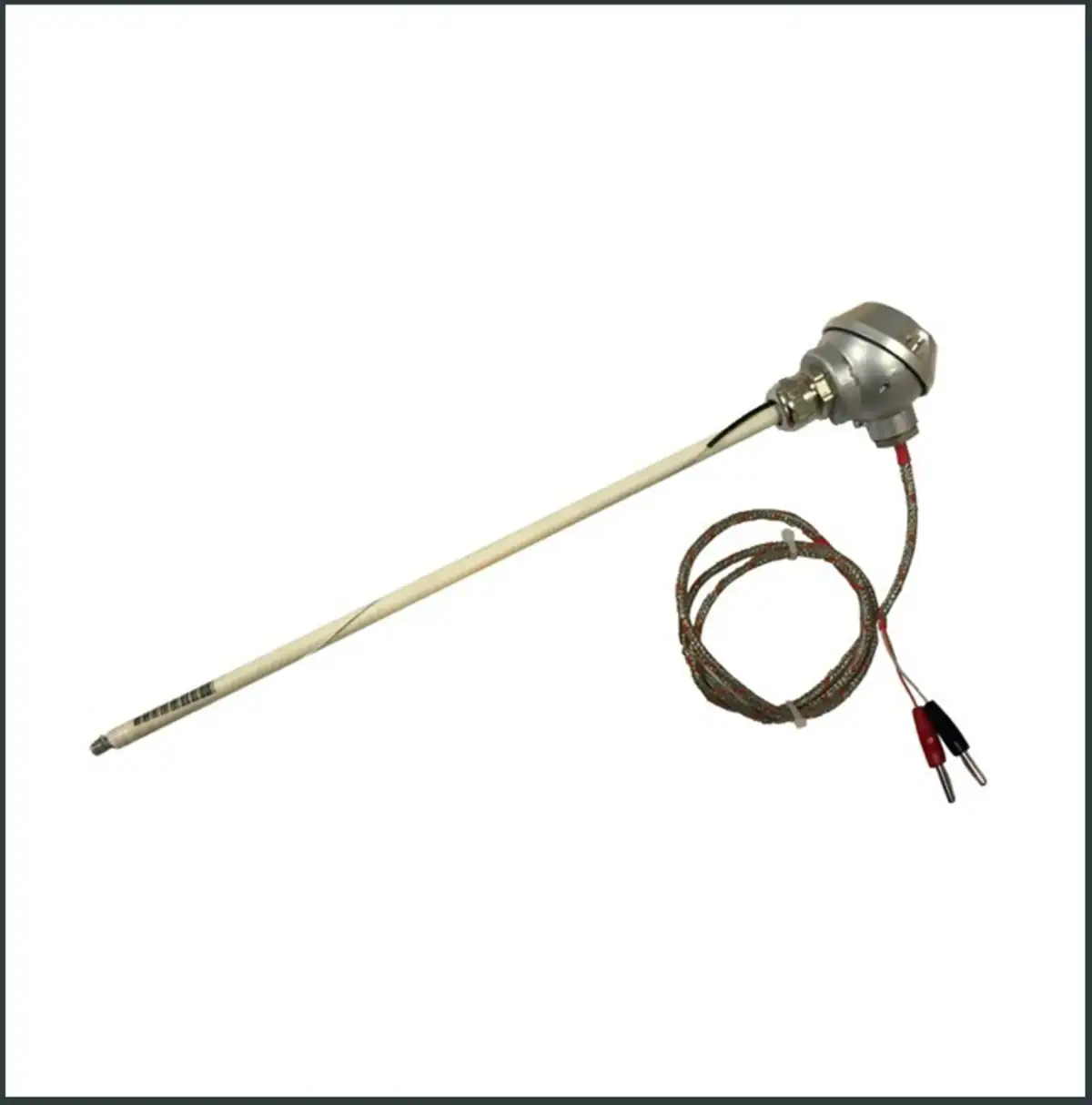
High-temperature industrial furnaces: CarboProbe
[CarboProbe](/en/produits/combustion/sonde-oxygene-carbone-four-industriel-haute-temperature/) probes operate from 600 °C to 1700 °C. All components exposed to hot gases are made of ceramic or platinum, with an alumina ceramic sheath around the sensing element. Combined with the CO content (measured or calculated), the oxygen measurement determines the carbon potential of the treatment atmosphere.
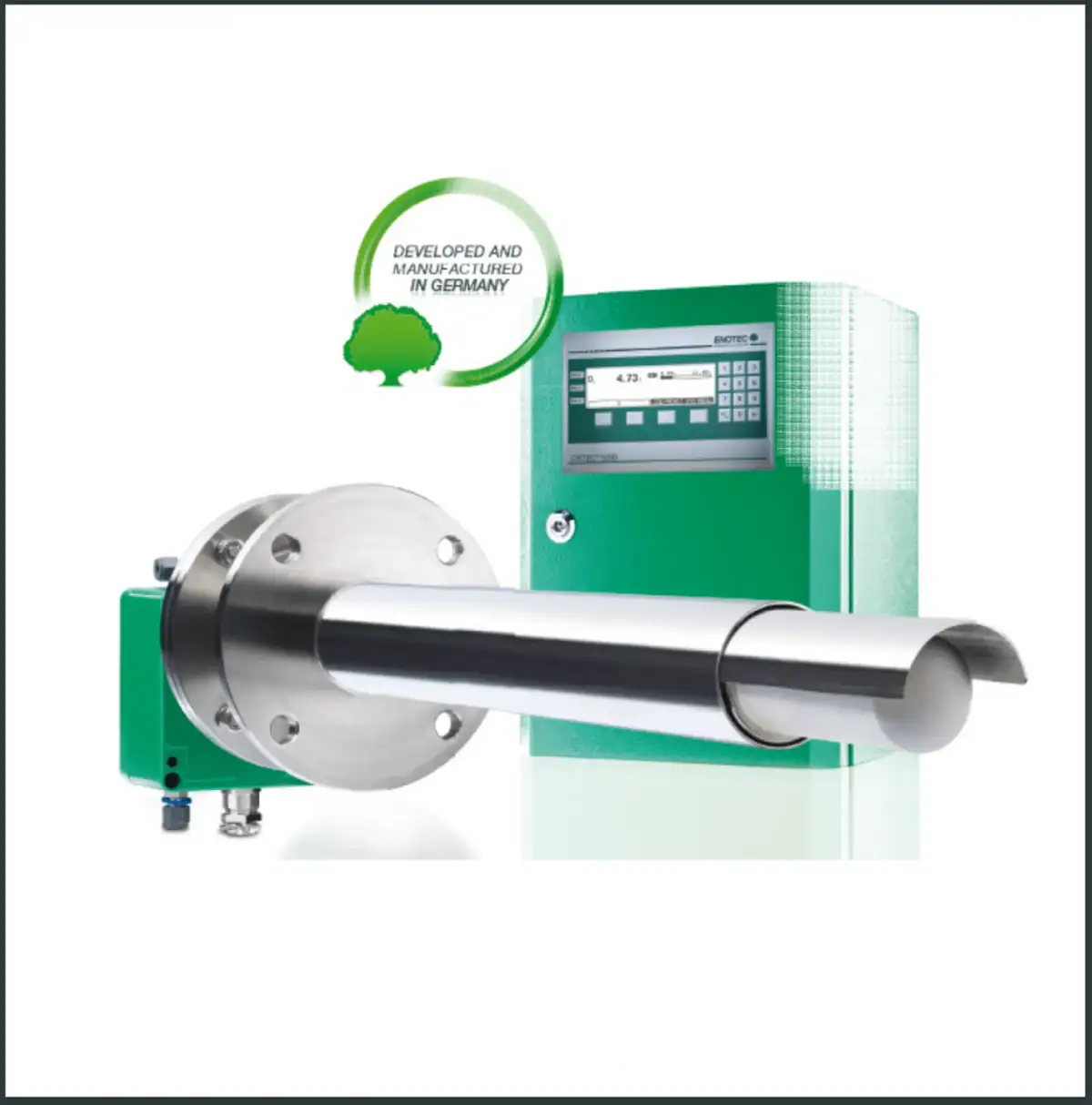
Direct flue gas measurement: OXITEC 5000
[OXITEC 5000](/en/produits/combustion/sonde-oxygene-in-situ-fumees-industrielles/) in-situ analyzers place the zirconium oxide sensor directly in the gas stream: oxygen variations are detected quickly and combustion can be controlled without delay. Designed for harsh conditions (high dust loads, corrosive gases), they have an average life of about 10 years, with an ATEX version available.
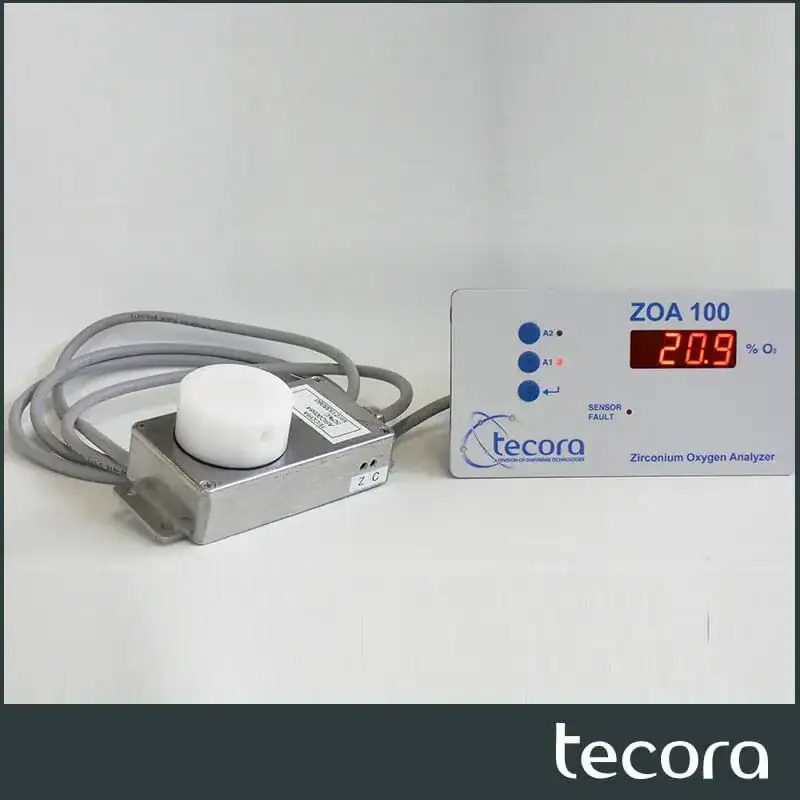
Process oxygen analyzer in %: ZOA 100
The [ZOA](/en/produits/combustion/mesure-oxygene-continu-sonde-oxyde-zirconium/) uses a ZOA 100 probe with a gas-diffusion zirconium oxide cell, for continuous or intermittent measurement with reduced maintenance. It comes as a panel mount with remote probe, a polycarbonate wall box or a portable case, and can also act as an oxygen detector.
How to choose?
Heat treatment furnace and carbon potential control: CarboProbe. Combustion control from flue gas, including dust-laden: OXITEC 5000. Oxygen in % on a process, fixed or portable: ZOA. For a selection suited to your installation, [contact our experts](/en/contact/).