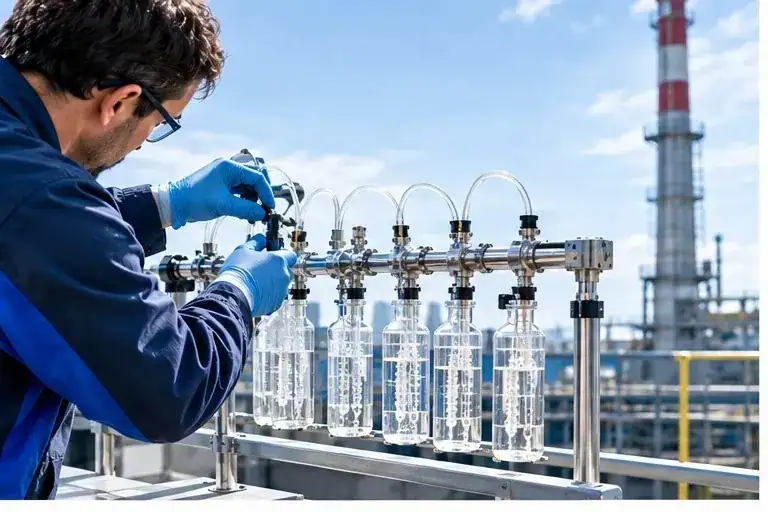
Technician connecting a series of impingers for hydrogen chloride sampling

Acid gases (HCl, HF, SO2)

EN 1911: Determination of Gaseous Chlorides Expressed as HCl

Manual reference method for measuring hydrogen chloride (HCl) in channelled emissions

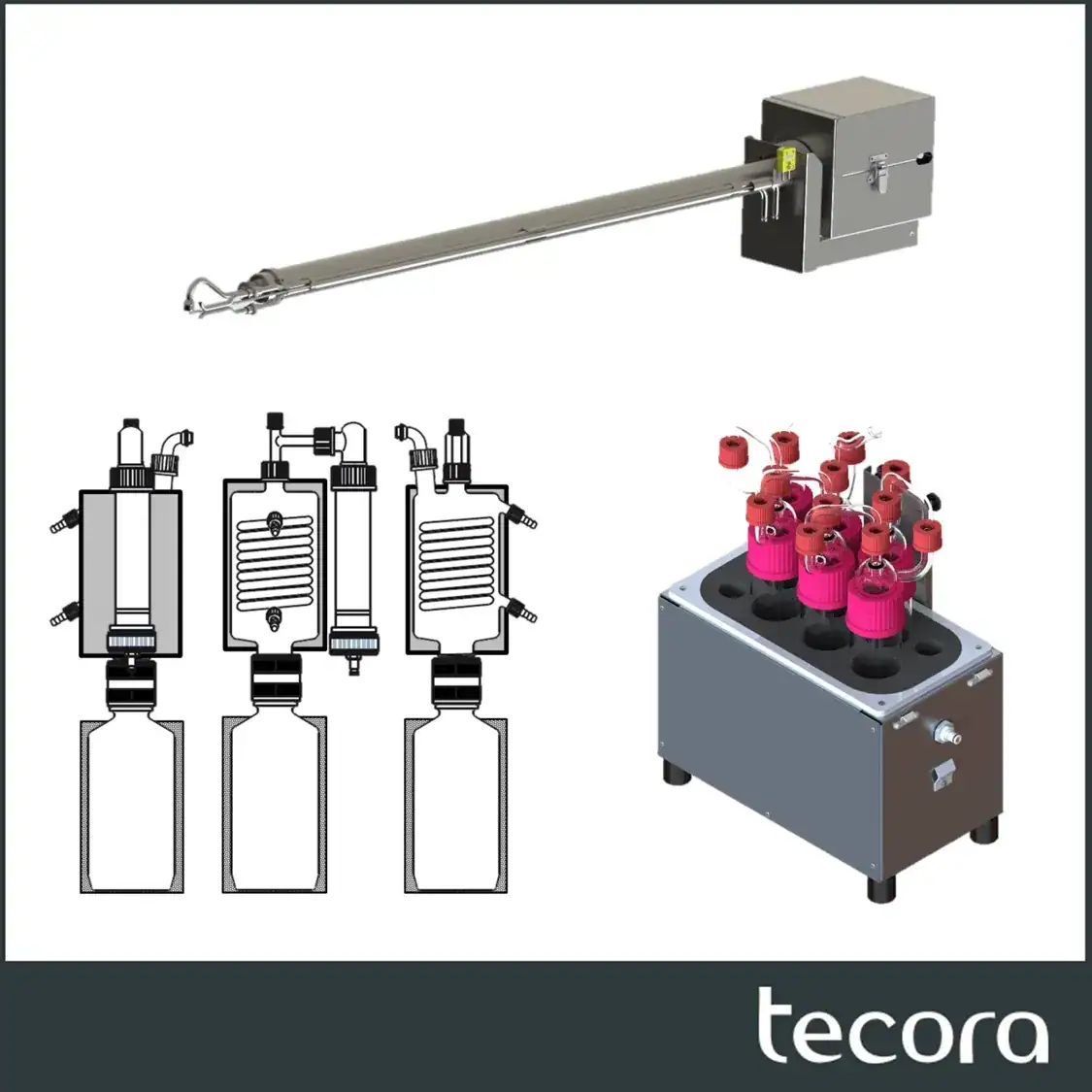
EN 1911 is the European reference method for determining the mass concentration of gaseous chlorides, expressed as HCl (hydrogen chloride), in channelled emissions from stationary sources. It relies on sampling the gaseous effluent through a series of wash bottles containing an absorbing solution, followed by determination of the chlorides by ion chromatography, titrimetry or potentiometry. It also serves as the reference method for qualifying automatic HCl monitors installed for continuous monitoring.

Key figures

  • EN 1911Standard
  • Ion chromatographyAnalysis
  • US EPA Method 26AUS equivalent
Hydrogen chloride is emitted by the combustion of chlorinated materials (waste containing PVC, alternative fuels in cement works, certain chemical processes) and is subject to strict emission limit values, in particular for waste incineration. Unlike the methods for measuring dust (EN 13284-1) or heavy metals (EN 14385), EN 1911 does not require isokinetic sampling in the strict sense: as HCl is a gaseous rather than particulate species, the suction rate does not need to be adjusted to the local velocity of the carrier gas to remain representative.

Bubbling sampling, not isokinetic

Unlike dust and metals, the gaseous nature of HCl does not require isokinetic adjustment of the suction rate

Gas/particle separation

A pre-filter removes the particulate fraction so that only gaseous chlorides are determined

Analysis by ion chromatography or titrimetry

Determination of the chloride ions captured in the absorbing solution

Reference for automatic HCl monitors

Comparison method used to qualify a continuous analyser

On the ground

Points to watch

Properly isolate the gaseous fraction from the particulate fraction

The pre-filter must be placed upstream of the impingers so as not to mix particulate chlorides with gaseous HCl.

Control trapping in the absorbing solution

The volume, concentration and contact time of the absorbing solution must guarantee complete trapping of the HCl throughout the sampling period.

Limit losses through condensation or adsorption

A heated probe and transfer line prevent HCl from condensing or reacting with the walls before it reaches the impingers.

Go further

Related standards

Frequently asked

FAQ

Questions about this standard? Here are the most common answers.

Another question?
What does the EN 1911 standard measure?

EN 1911 determines the mass concentration of gaseous chlorides, expressed as HCl, in channelled emissions from stationary sources, by bubbling sampling and laboratory analysis.

Must EN 1911 sampling be isokinetic, as for dust?

No. As HCl is a gaseous species, the suction rate does not need to be adjusted to the local gas velocity, unlike the methods for measuring dust (EN 13284-1) or heavy metals (EN 14385).

How are chlorides determined in the laboratory?

The absorbing solution collected after sampling is most often analysed by ion chromatography; titrimetry and specific-electrode potentiometry remain conventional alternatives.

Is EN 1911 equivalent to an American method?

The US EPA Method 26/26A family plays a comparable role but covers a wider scope (HCl, HF and free halogens Cl2/Br2 in a single train), whereas EN 1911 is limited to HCl. The two references must be checked separately according to the applicable jurisdiction.

Preparing a measurement campaign? Our experts can help.

Personalised advice, a fast quote and technical support to choose the right instrument for this standard.