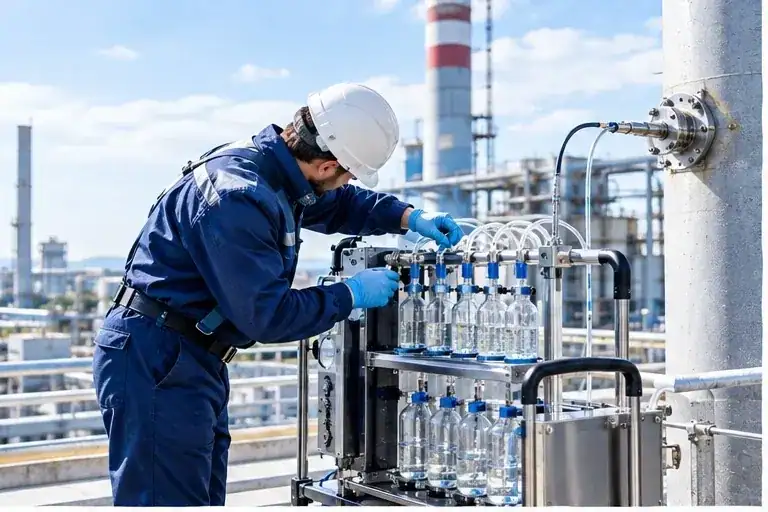
Technician assembling a two-stage sampling train for halides and halogens

Acid gases (HCl, HF, SO2)

US EPA Method 26A: Hydrogen Halides and Halogens

American isokinetic method for the combined determination of HCl, HF and free halogens (Cl2, Br2) in channelled emissions

US EPA Method 26A is an American reference method for the isokinetic determination of hydrogen halides (HCl, HF) and free halogens (Cl2, Br2) in stationary source emissions, using a two-stage sampling train of absorbing solutions, acidic then basic. It covers a wider scope than the European method EN 1911, which is limited to HCl.

Key figures

  • US EPA Method 26AStandard
  • Ion chromatographyAnalysis
  • EN 1911 (HCl only)EU equivalent
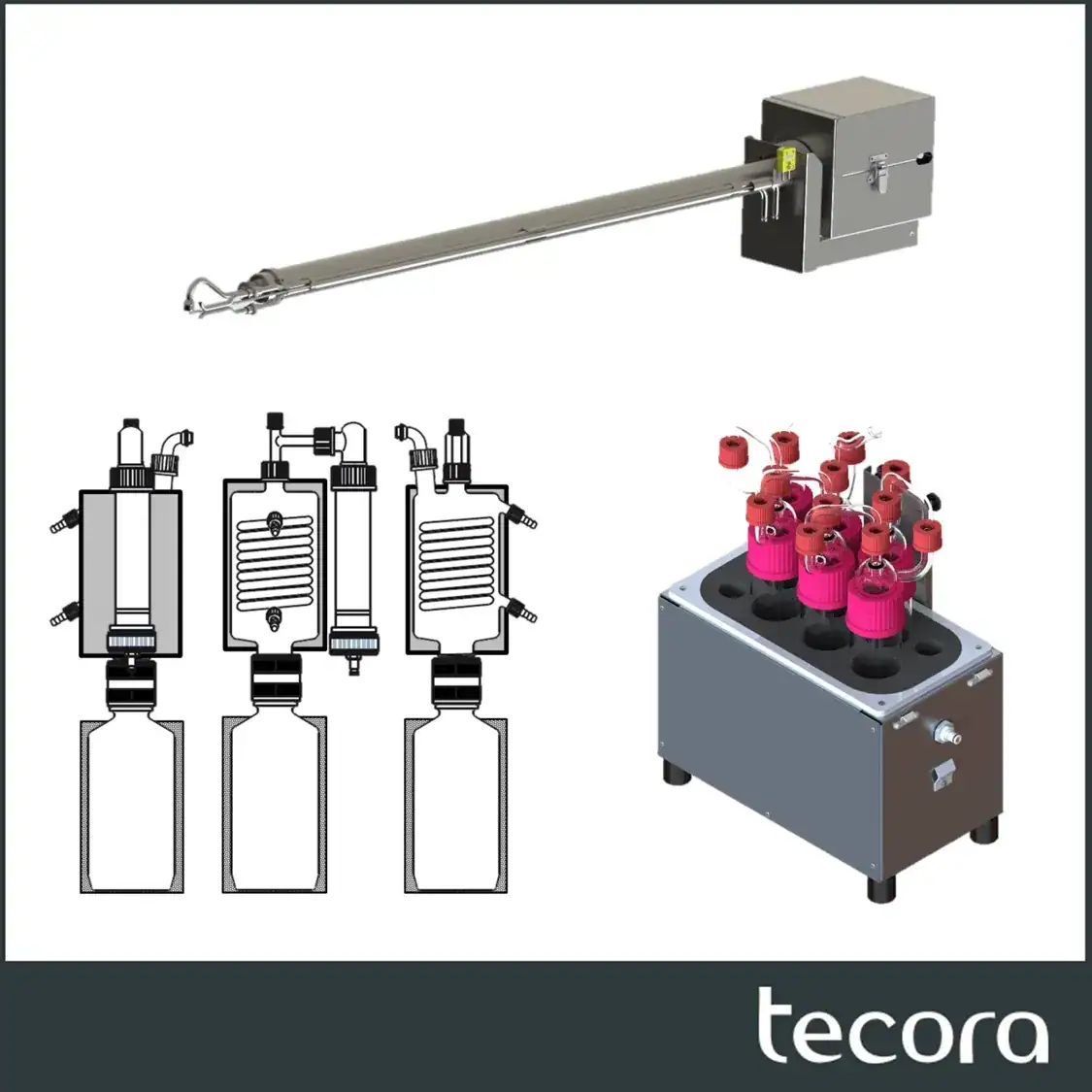
The Method 26A sampling train is isokinetic and organised into two successive absorbing stages: a dilute acidic solution (sulphuric acid) preferentially captures the hydrogen halides (HCl, HF), while a buffered basic solution (sodium hydroxide) then captures the free halogens (Cl2, Br2), stabilising them in a determinable form. Each fraction is analysed separately by ion chromatography.

Two absorbing stages

Acidic solution for HCl/HF, basic solution for free halogens (Cl2, Br2)

Isokinetic sampling

Reinforced version of Method 26, which is non-isokinetic

Wider scope than EN 1911

Also captures free halogens, not only HCl

Ion chromatography analysis

Separate determination of each absorbing fraction

On the ground

Points to watch

Distinguish Method 26 and Method 26A

The isokinetic version (26A) is generally required for regulated sources such as hazardous waste incinerators; the simplified version (26) suits less critical sources.

Rigorously separate the acidic and basic stages

Mixing the two solutions would skew the split between hydrogen halides and free halogens.

Check the exact reference that applies

Some texts accept the simplified version (Method 26) while others explicitly require the isokinetic version (26A).

Go further

Related standards

Frequently asked

FAQ

Questions about this standard? Here are the most common answers.

Another question?
What does US EPA Method 26A measure?

Using isokinetic sampling with two absorbing stages, it determines emissions of hydrogen halides (HCl, HF) and free halogens (Cl2, Br2) in stationary source emissions.

What is the difference between Method 26 and Method 26A?

Method 26 does not require isokinetic sampling and suits less critical sources. Method 26A is the reinforced isokinetic version, generally required for regulated sources such as hazardous waste incinerators.

How does it differ from EN 1911?

EN 1911 is limited to HCl by simple non-isokinetic bubbling. Method 26A covers a wider scope (HCl, HF and free halogens Cl2/Br2) in an isokinetic train with two absorbing stages.

Why two separate absorbing stages?

The acidic solution preferentially captures the hydrogen halides, while the basic solution then captures the free halogens in a stable, determinable form. Separating the two stages makes it possible to quantify each family independently.

Preparing a measurement campaign? Our experts can help.

Personalised advice, a fast quote and technical support to choose the right instrument for this standard.