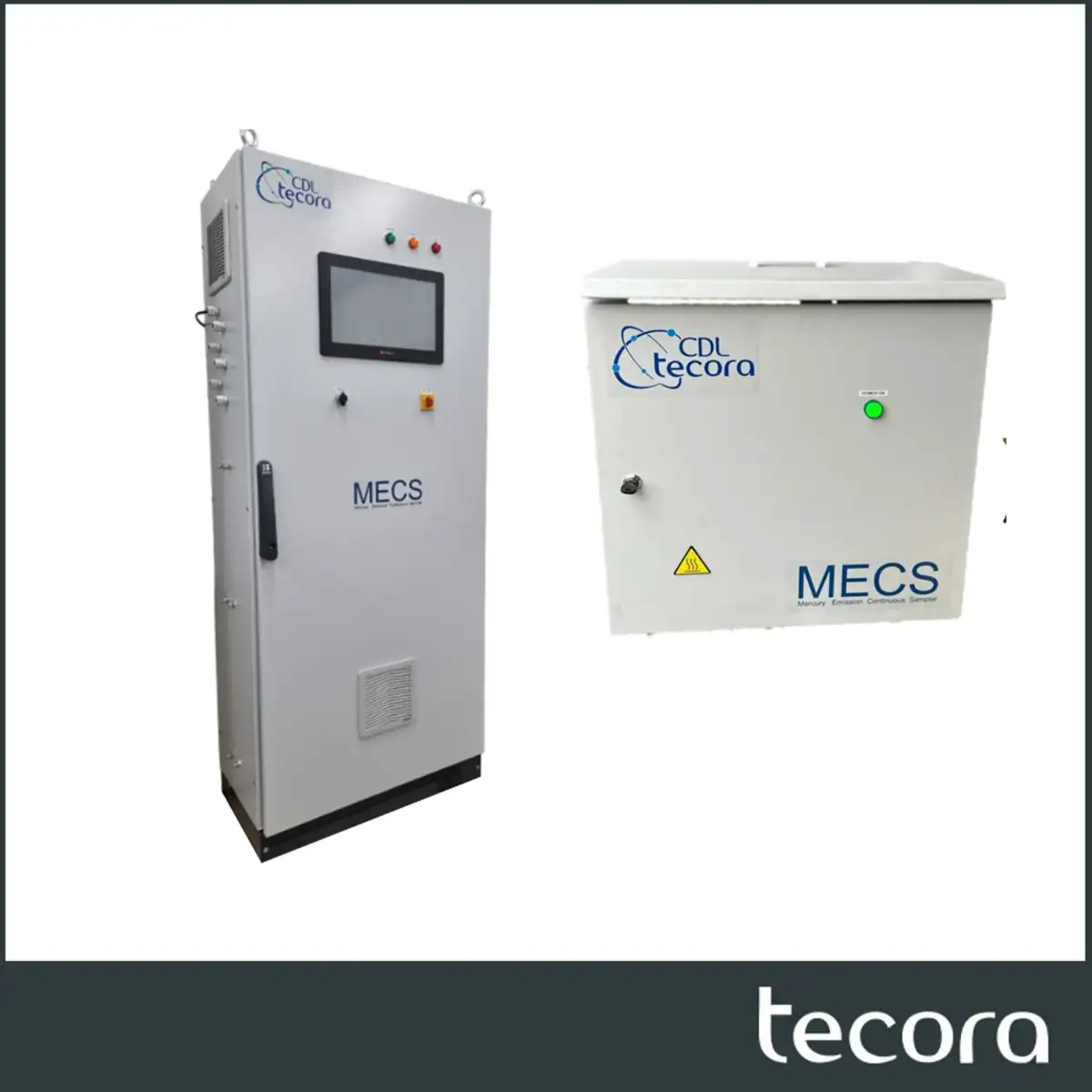
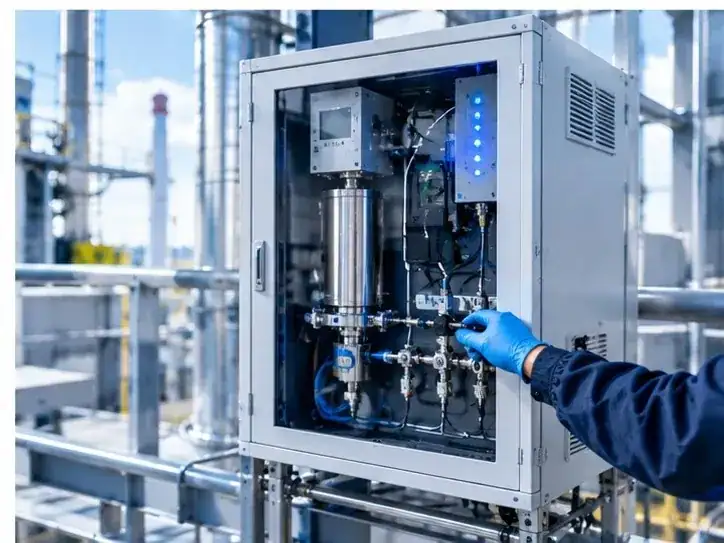
Continuous mercury measurement cabinet installed on an industrial platform — CDL-Tecora

Mercury

CEN/TS 17286: Measuring Mercury with Automated Measuring Systems (AMS)

European technical specification for continuous, semi-continuous or automated periodic measurement of mercury

CEN/TS 17286 is a European technical specification (CEN/TS status, not yet a full EN standard) that defines the requirements applicable to automated measuring systems (AMS) for mercury operating continuously, semi-continuously or by automated periodic sampling, complementing the manual reference method EN 13211. It responds to a growing requirement for continuous mercury monitoring, notably under the BAT conclusions of several sectors (waste-to-energy plants, cement works), which now require continuous monitoring rather than periodic spot checks.

Key figures

  • CEN/TS (technical specification)Status
  • 3 (continuous, semi-continuous, periodic)AMS families
  • EN 13211Reference method
CEN/TS 17286 covers three families of mercury AMS: direct continuous measurement systems, semi-continuous systems with a periodic analysis cycle, and automated periodic sampling systems that accumulate the sample on an adsorbent cartridge (often gold amalgamation), which is then analysed by thermal desorption. Each of these families is validated by comparison with the manual reference method EN 13211, following a calibration logic close to that of EN 14181 for dust and metals, but specifically adapted to mercury since mercury remains outside the scope of EN 14181 and EN 13284-2.

Three AMS families covered

Direct continuous measurement, semi-continuous measurement with a periodic cycle, or automated periodic sampling on an adsorbent cartridge

Complementary to EN 13211

The manual method remains the reference used to validate and calibrate automated systems

Meets BAT continuous-monitoring requirements

Several BREF conclusions now require continuous mercury monitoring rather than one-off checks

Technical specification status (CEN/TS)

Intermediate document before a possible full EN standard

On the ground

Points to watch

Choosing the AMS family suited to the emission profile

A process whose mercury emissions vary widely over time benefits more from continuous or periodic monitoring than from widely spaced spot checks.

Plan for the double cartridge on periodic accumulation systems

The second cartridge (safety trap) detects any breakthrough if the first becomes saturated before the end of the exposure period.

Align AMS validation with parallel EN 13211 campaigns

Qualifying an automated system relies on a direct comparison with the manual reference method, carried out on the same duct.

Go further

Related standards

Frequently asked

FAQ

Questions about this standard? Here are the most common answers.

Another question?
What is an automated measuring system (AMS) for mercury?

It is an instrument permanently installed on a duct to monitor mercury continuously, semi-continuously or by automated periodic sampling, as opposed to a one-off manual check carried out once or twice a year under EN 13211.

Does CEN/TS 17286 replace EN 13211?

No, the two are complementary: EN 13211 remains the manual reference method used to validate and calibrate the automated systems described by CEN/TS 17286.

What is the difference between continuous measurement and automated periodic sampling?

Continuous measurement gives a near real-time reading, whereas automated periodic sampling accumulates the sample on a cartridge for several days to several weeks, giving a representative average value that is available only after an analysis delay.

Why does mercury have its own specification, separate from EN 14181?

The EN 14181 framework (quality assurance of AMS) and its EN 13284-2 counterpart explicitly exclude mercury from their scope, as the EN 14385 page also points out. CEN/TS 17286 fills this gap by defining a technical framework dedicated to mercury AMS.

Preparing a measurement campaign? Our experts can help.

Personalised advice, a fast quote and technical support to choose the right instrument for this standard.