
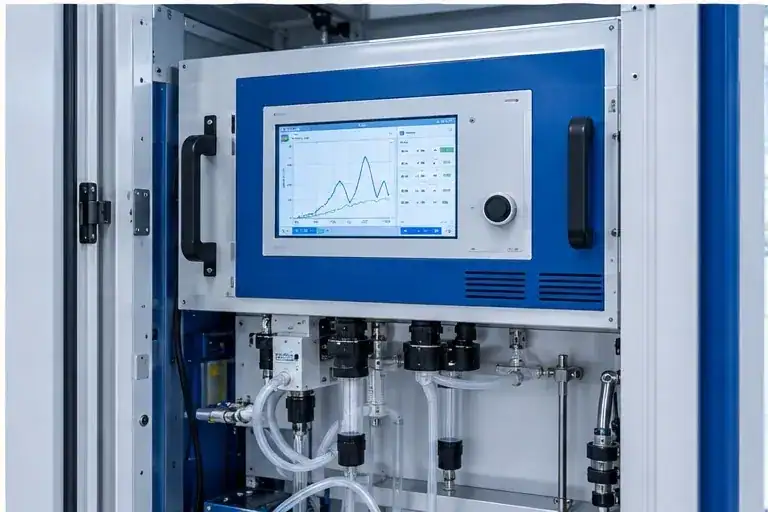
Front panel of an ambient air quality analyser displaying a concentration curve

Ambient air quality

EN 14211: Measurement of Nitrogen Dioxide and Nitrogen Monoxide in Ambient Air by Chemiluminescence

Chemiluminescence reference method for monitoring NO2 and NO in ambient air

EN 14211 is the European reference method for measuring the concentration of nitrogen dioxide (NO2) and nitrogen monoxide (NO) in ambient air by chemiluminescence. It is used by air quality monitoring networks for the regulatory control of these pollutants, which come mainly from road traffic and combustion.

Key figures

  • EN 14211Standard
  • ChemiluminescencePrinciple
  • Directive 2008/50/ECRegulatory framework

The measurement principle relies on the chemiluminescent reaction between the NO in the sample and ozone generated internally by the analyser: this reaction produces an excited NO2 molecule that emits light as it returns to its ground state, an emission whose intensity is proportional to the NO concentration. NO2, which does not react directly, is measured indirectly: the sample passes through a converter that reduces it to NO, and the measurement of total NOx (NO + converted NO2) compared with the measurement of NO alone gives NO2 by difference.

Chemiluminescence principle

Reaction between NO and internally generated ozone, producing light emission proportional to the concentration

NO2 measured by difference

A converter reduces NO2 to NO to obtain total NOx, then NO2 by subtracting direct NO

Two converter technologies

Thermal (historical) or photolytic (better specificity, fewer interferences)

Reference for monitoring stations

Used to validate the continuous analysers of air quality networks

On the ground

Points to watch

Check the converter type

A thermal converter can slightly overestimate NO2 in the presence of other nitrogen compounds; a photolytic converter limits this interference.

Respect the calibration cycles

Periodic zero/span checks are essential to the reliability of a chemiluminescence analyser.

Do not confuse with channelled-emission methods

EN 14211 applies to ambient air, not to channelled nitrogen oxide emissions.

Go further

Related standards

Frequently asked

FAQ

Questions about this standard? Here are the most common answers.

Another question?
What does the EN 14211 standard measure?

It determines the concentration of nitrogen dioxide (NO2) and nitrogen monoxide (NO) in ambient air, using a reference method based on chemiluminescence.

How is NO2 measured when the chemiluminescent reaction involves NO?

The sample is measured twice: once directly (NO alone), and once after passing through a converter that reduces NO2 to NO (giving total NOx). NO2 is obtained by the difference between these two measurements.

What is the difference between a thermal and a photolytic converter?

The thermal (molybdenum) converter is historically the most widespread but can also convert other nitrogen compounds to NO, slightly overestimating NO2. The photolytic converter, more recent, is more specific and limits this interference.

Does this standard apply to channelled industrial emissions?

No, it applies to ambient air. The measurement of nitrogen oxides in channelled emissions falls under other references specific to continuous automatic measuring systems (CEMS).

Preparing a measurement campaign? Our experts can help.

Personalised advice, a fast quote and technical support to choose the right instrument for this standard.