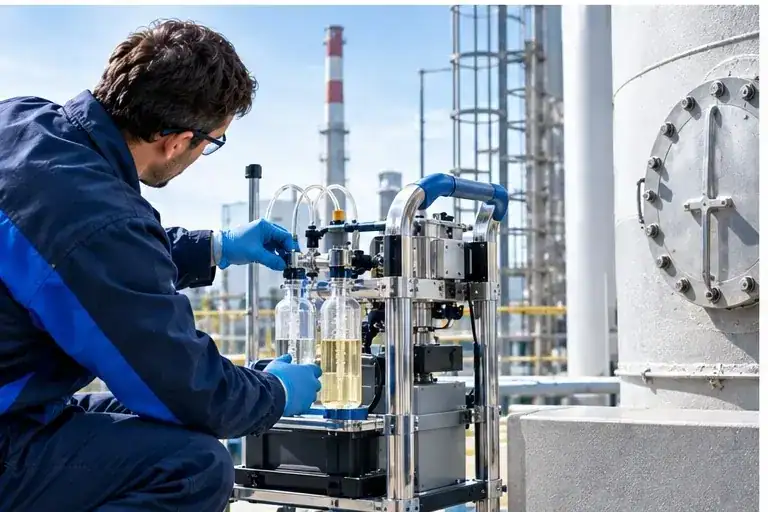
Technician adjusting a mobile sampling train for sulphuric acid mist and SO2

Acid gases (HCl, HF, SO2)

US EPA Method 8: Sulphuric Acid Mist and Sulphur Dioxide

American isokinetic method for the combined measurement of sulphuric acid mist (H2SO4) and sulphur dioxide (SO2)

US EPA Method 8 is the American reference method for determining emissions of sulphuric acid mist (H2SO4, including sulphur trioxide SO3) and sulphur dioxide (SO2) in stationary source emissions, from a single isokinetic sampling train. Unlike EN 14791, which is limited to SO2, this American method captures both species in a single campaign.

Key figures

  • US EPA Method 8Standard
  • Titrimetry / ion chromatographyAnalysis
  • H2SO4 (SO3) + SO2Targets
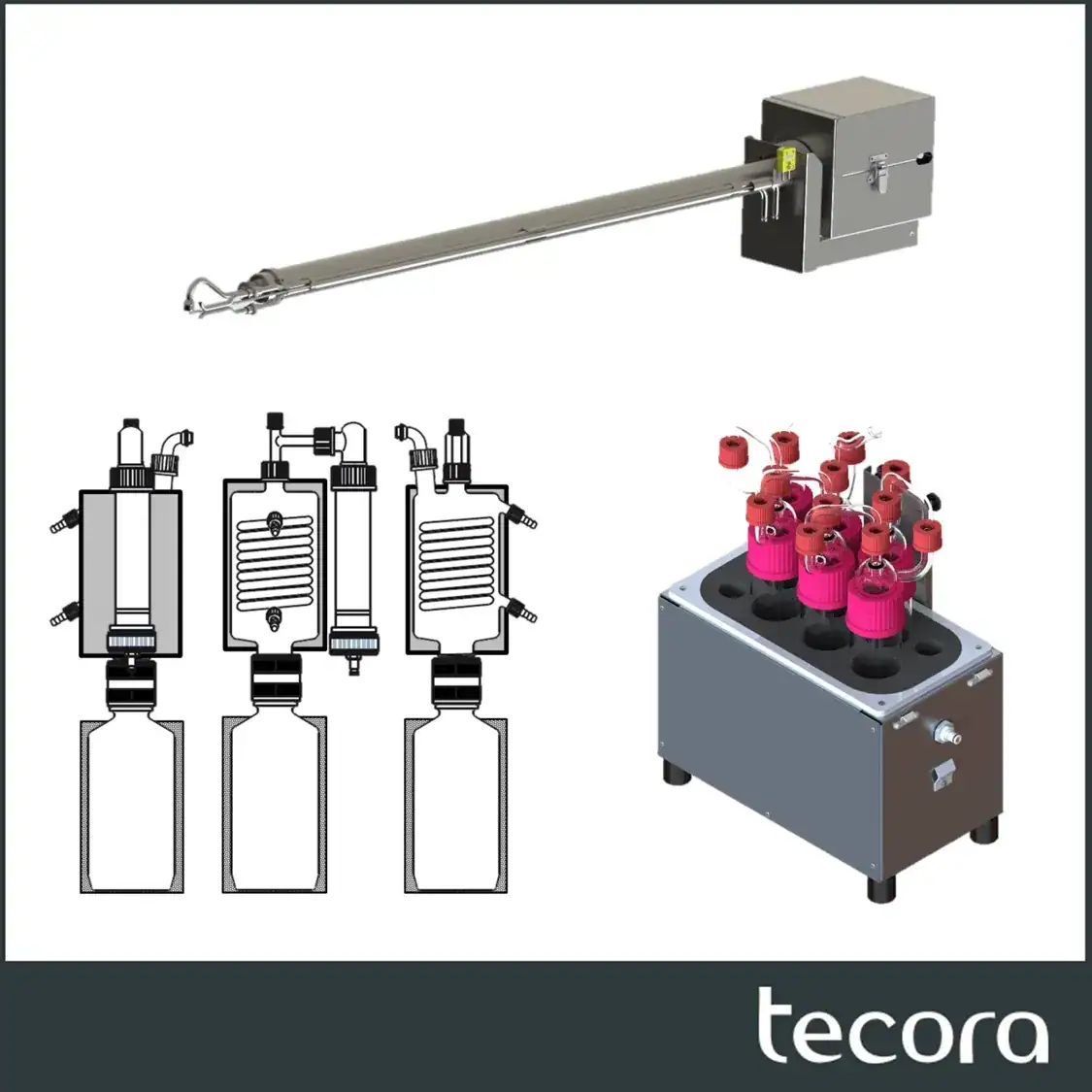
The Method 8 sampling train uses an isokinetic architecture similar to that of the particulate methods (Method 5/17): a heated probe extracts the sample at a velocity adjusted to that of the gas stream, before it passes through a series of wash bottles organised in two successive stages. The first stage, containing isopropanol (IPA), selectively captures sulphuric acid mist and SO3 without converting or oxidising them. The second stage, containing hydrogen peroxide, then oxidises SO2 to sulphate, exactly as in the principle of EN 14791. This two-stage separation makes it possible to quantify each species independently, by titrimetry with barium perchlorate (thorin indicator) or by ion chromatography.

Two species in a single train

Isopropanol captures H2SO4/SO3 mist, hydrogen peroxide captures SO2

Isokinetic sampling

Unlike EN 14791 and EN 1911, the method includes an upstream step requiring compliance with isokinetic velocity

Analysis by titrimetry or ion chromatography

Separate quantification of the sulphates formed at each stage

Relevant for multi-jurisdiction sites

Makes it possible to meet SO2 and H2SO4 requirements in a single campaign rather than two separate protocols

On the ground

Points to watch

Respect the isokinetic ratio

As with any method derived from the Method 5 train, a poorly adjusted suction rate biases the fraction captured upstream of the impingers.

Rigorously separate the two absorbing stages

Isopropanol and hydrogen peroxide must remain in separate bottles so as not to cross the results of the two species.

Check compatibility with EN 14791

A site that must demonstrate European compliance in addition to Method 8 should check whether a combined protocol is acceptable or whether two separate campaigns are required.

Go further

Related standards

Frequently asked

FAQ

Questions about this standard? Here are the most common answers.

Another question?
What does US EPA Method 8 measure?

In a single isokinetic sampling campaign, it determines emissions of sulphuric acid mist (H2SO4, including SO3) and sulphur dioxide (SO2) in stationary source emissions.

Why must sampling be isokinetic when SO2 alone (EN 14791) does not require it?

Sulphuric acid mist behaves partly like an aerosol/fine particle, sensitive to the sampling velocity, unlike gaseous SO2 alone. Method 8 therefore inherits the isokinetic requirement of the particulate methods.

What is the difference between Method 6 and Method 8?

Method 6 measures only SO2, with a principle close to EN 14791. Method 8 adds an upstream isopropanol stage to also capture sulphuric acid mist in the same campaign.

Is this method equivalent to EN 14791?

Partly: both methods capture SO2 through a comparable hydrogen peroxide oxidation principle, but Method 8 also covers sulphuric acid mist, a scope that EN 14791 does not cover.

Preparing a measurement campaign? Our experts can help.

Personalised advice, a fast quote and technical support to choose the right instrument for this standard.